
Introduction
Why Rich Dad Poor Dad Still Matters Today
Few personal finance books spark as much discussion—and disagreement—as Rich Dad Poor Dad. Decades after its first release, it continues to appear on bestseller lists, recommended reading shelves, and online forums where people debate money, work, and wealth. Some readers call it life-changing. Others criticize it for being too simple or repetitive. Yet despite the controversy, the book remains influential for a reason: it challenges deeply ingrained beliefs about money that many people inherit without question.
At its core, Rich Dad Poor Dad speaks to a frustration shared by millions. You work hard, follow the rules, get educated, and still feel financially stuck. Bills arrive faster than pay raises. Saving alone doesn’t seem to move the needle. The idea of becoming wealthy feels distant, reserved for entrepreneurs, investors, or people born into the right families. This book steps directly into that discomfort and asks an uncomfortable question: what if the advice most people follow about money is incomplete—or even wrong?
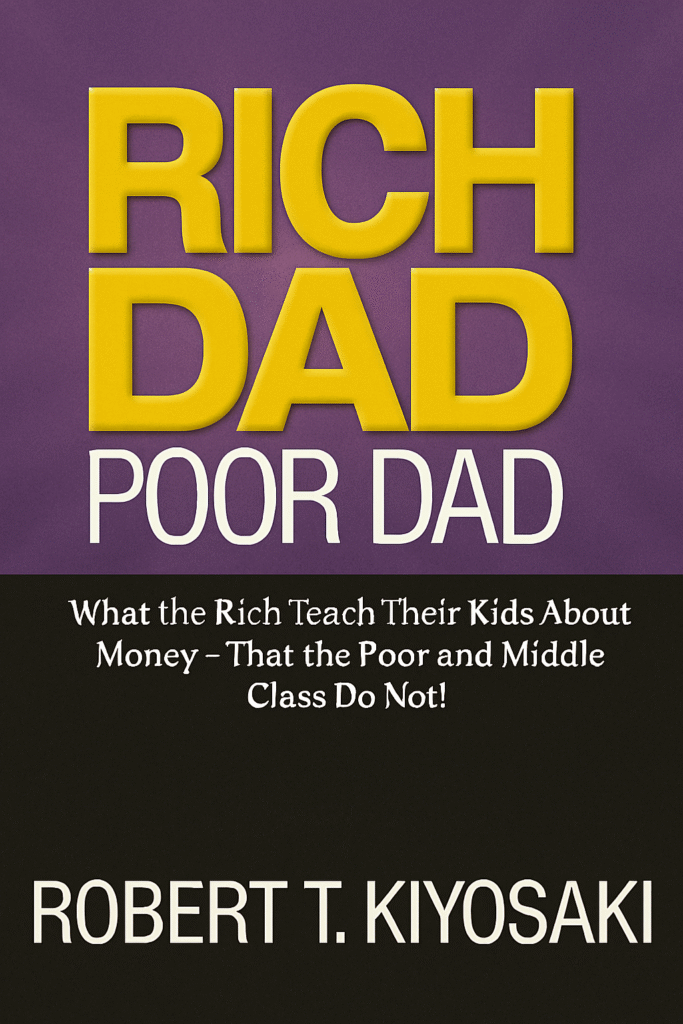
Rather than offering complex investment formulas or technical market analysis, the book focuses on mindset. It argues that financial outcomes are often shaped long before the first paycheck arrives, influenced by what we are taught about work, risk, security, and success. By contrasting two father figures with opposite financial philosophies, the author uses storytelling to expose how beliefs shape behavior—and behavior shapes results.
This approach resonates because it feels personal. Readers recognize themselves in the patterns described: working for money instead of making money work for them, confusing income with wealth, and avoiding financial education out of fear or boredom. The book doesn’t promise overnight riches, but it does promise a shift in perspective. For many, that shift becomes the starting point for learning about investing, entrepreneurship, and financial independence.
In today’s world of rising living costs, job uncertainty, and constant economic change, the book’s central message feels especially relevant. Traditional career paths no longer guarantee stability. Pensions are rare, and job loyalty doesn’t always pay off. Against this backdrop, Rich Dad Poor Dad encourages readers to think beyond salaries and titles and to develop skills that offer flexibility and long-term control.
This article provides a detailed, balanced summary of Rich Dad Poor Dad, breaking down its main ideas, themes, strengths, and weaknesses. You’ll learn what the book actually teaches, how its lessons apply in real life, and who will benefit most from reading it. Whether you’re considering the book for the first time or revisiting its ideas with a more critical eye, this guide is designed to help you extract practical value without hype or exaggeration.
About the Author: Robert T. Kiyosaki
Robert T. Kiyosaki is an entrepreneur, investor, and educator best known for his work in financial literacy. Before becoming a global bestselling author, he experienced both business success and failure, which heavily influenced his views on money and risk. His background includes military service, entrepreneurship, and real estate investing—experiences that shaped the lessons he later shared through books and seminars.
Kiyosaki’s writing style is direct and conversational. He avoids academic language and instead relies on stories, repetition, and simple analogies. This makes his ideas accessible to readers without a financial background, though critics argue that the same simplicity can feel repetitive or lacking in detail. Supporters, however, see this as a strength, noting that the book is meant to change thinking rather than teach technical skills.
What gives Kiyosaki credibility in the eyes of many readers is his emphasis on financial education as a lifelong process. He positions himself not as a flawless expert but as someone who learned by doing—and by making mistakes. While debates about his personal wealth and business claims exist, the influence of his work on financial education is undeniable. Rich Dad Poor Dad has introduced millions to concepts like assets, liabilities, and passive income, often for the first time.
Book Summary: A Detailed Breakdown of the Core Ideas
The Two Dads Concept
The foundation of the book rests on a simple but powerful contrast. Kiyosaki describes growing up with two father figures: his biological father, referred to as the “poor dad,” and the father of his best friend, known as the “rich dad.” Importantly, “poor” and “rich” do not describe character or intelligence. Both men are hardworking and educated. The difference lies in how they think about money.
The poor dad values job security, formal education, and steady promotions. He believes that working hard for a good employer is the safest path. The rich dad, on the other hand, emphasizes financial independence, entrepreneurship, and understanding how money works. He views money as a tool rather than a goal and believes learning never stops.
This contrast allows the author to present two opposing financial philosophies without attacking individuals. Readers are invited to examine which ideas they’ve adopted—often unconsciously—and whether those ideas serve their long-term goals.
Lesson 1: The Rich Don’t Work for Money
One of the book’s most discussed ideas is the claim that wealthy people don’t work for money in the traditional sense. This doesn’t mean they avoid effort. Instead, they focus on building systems and assets that generate income over time.
The poor dad mindset equates work with income: no work means no money. The rich dad mindset separates effort from earnings by prioritizing ownership. Businesses, investments, and intellectual property can produce income even when the owner is not actively working. This shift in thinking encourages readers to ask different questions, such as how income is generated and who controls it.
Lesson 2: Financial Literacy Is the Real Education
The book argues that schools teach academic and professional skills but rarely address personal finance. As a result, many high-income earners still struggle financially. Financial literacy, according to Kiyosaki, includes understanding accounting basics, cash flow, investing, and markets.
Rather than promoting formal degrees in finance, the book encourages practical learning. Reading financial statements, understanding taxes, and studying investments are presented as skills anyone can learn. The key message is that ignorance, not lack of income, is often the root of financial stress.
Lesson 3: Mind Your Own Business
Here, “business” doesn’t necessarily mean quitting your job. The idea is to focus on building assets outside of earned income. Employment income pays bills, but assets create wealth. By directing surplus income into investments rather than liabilities, individuals can gradually increase financial independence.
The book emphasizes that true wealth lies in what you own, not how much you earn. This lesson challenges the cultural emphasis on job titles and salaries, urging readers to pay closer attention to net worth and cash flow.
Lesson 4: Taxes and Corporations
Kiyosaki highlights how tax systems often favor asset owners and business operators. While employees pay taxes before receiving income, business owners can deduct expenses and manage cash flow more strategically. This section introduces readers to the idea that understanding legal structures can significantly impact financial outcomes.
The message is not about avoiding taxes illegally but about learning how financial systems work. Knowledge allows individuals to make informed decisions within the rules, rather than being disadvantaged by ignorance.
Lesson 5: The Rich Invent Money
This lesson focuses on opportunity recognition. The book suggests that wealth often comes from seeing possibilities others overlook. This requires creativity, confidence, and a willingness to act despite uncertainty.
Kiyosaki stresses that fear and self-doubt prevent many people from pursuing opportunities. By developing financial intelligence, individuals can evaluate risks more clearly and act decisively when opportunities arise.
Lesson 6: Work to Learn, Not Just to Earn
The final core lesson encourages skill development over immediate income. Jobs can be valuable training grounds if approached strategically. Learning sales, communication, leadership, and financial skills can provide long-term benefits that outweigh short-term pay.
This lesson reframes work as education. Instead of chasing higher salaries alone, readers are encouraged to seek experiences that build versatility and confidence.
Key Themes and Messages
Mindset Shapes Financial Outcomes
The book repeatedly returns to the idea that beliefs drive behavior. How you think about money influences how you earn, spend, save, and invest. Changing financial results requires changing thought patterns first.
Assets vs. Liabilities
Perhaps the most famous concept from the book is the distinction between assets and liabilities. Assets put money in your pocket; liabilities take money out. This simple framework helps readers evaluate purchases more critically and prioritize cash-flow-generating investments.
Risk, Fear, and Education
Fear of failure is portrayed as a major barrier to financial growth. The book argues that education reduces fear by increasing understanding. Taking calculated risks becomes easier when you know what you’re doing.
Financial Independence Over Job Security
Rather than relying solely on employers or institutions, the book promotes self-reliance through ownership and education. Independence, not comfort, is positioned as the ultimate goal.
Pros and Cons: A Balanced View
Pros
- Encourages critical thinking about money
- Easy-to-understand concepts for beginners
- Strong focus on mindset and financial education
- Motivational without being overly technical
Cons
- Limited practical detail for advanced investors
- Repetitive storytelling may feel excessive
- Not all examples are easily verifiable
- May oversimplify complex financial realities
Who This Book Is For (And Who It’s Not)
Ideal for:
- Beginners interested in personal finance
- Readers seeking a mindset shift
- Aspiring entrepreneurs and investors
Not ideal for:
- Readers looking for step-by-step investment strategies
- Those wanting detailed market analysis
- People expecting quick financial solutions
Practical Takeaways and Lessons
- Track assets and liabilities honestly
- Invest in financial education consistently
- View money decisions through long-term impact
- Develop skills that create flexibility
- Question traditional advice respectfully
Comparison With Similar Books
Compared to The Millionaire Next Door, which focuses on data and lifestyle habits, Rich Dad Poor Dad is more philosophical. Unlike Think and Grow Rich, which emphasizes belief and visualization, Kiyosaki’s book ties mindset to tangible financial concepts. Each serves a different purpose, but Rich Dad Poor Dad often acts as a gateway to further learning.
Frequently Asked Questions
Is Rich Dad Poor Dad suitable for beginners?
Yes, it’s often recommended as an entry point into personal finance.
Does the book teach investing strategies?
It introduces concepts but does not provide detailed instructions.
Is the advice still relevant today?
The mindset lessons remain applicable despite economic changes.
Can this book make you rich?
It offers perspective, not guarantees.
Is it worth reading despite criticism?
For many, the ideas spark valuable reflection and learning.
Final Verdict and Recommendation
Rich Dad Poor Dad is not a technical manual or a promise of fast wealth. Its strength lies in challenging assumptions and encouraging readers to take responsibility for their financial education. While it has limitations and should be read critically, its core message remains powerful: understanding money is a skill, and skills can be learned.
For readers willing to question long-held beliefs and explore new ways of thinking about income, assets, and work, this book offers a meaningful starting point. It may not provide all the answers, but it asks the right questions—and that alone can change the direction of a financial journey.