Introduction:
Why The 48 Laws of Power Continues to Fascinate and Divide Readers
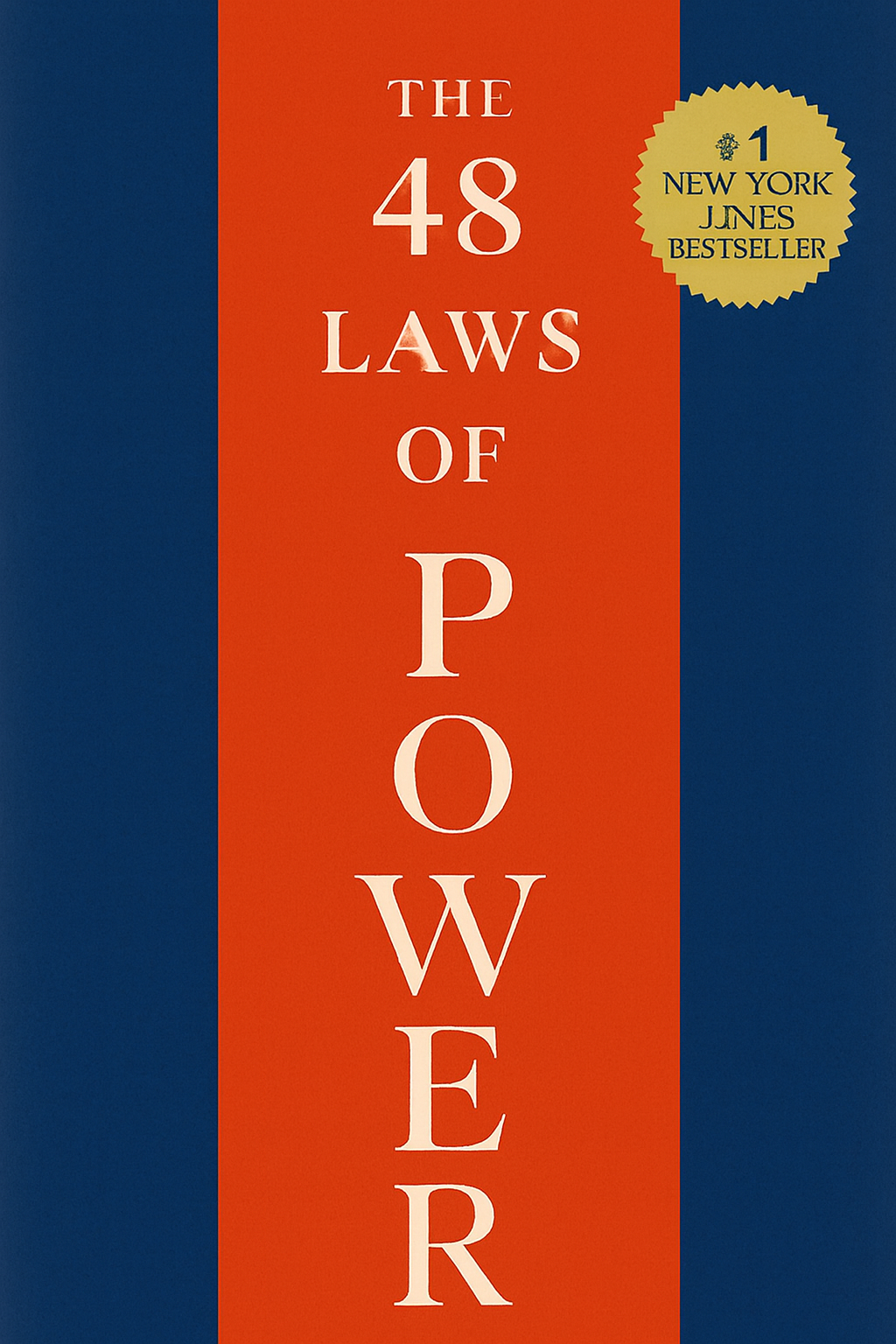
Few books provoke as much curiosity, debate, and misunderstanding as the 48 Laws of Power. Since its publication, it has been praised as a sharp guide to understanding human behavior and criticized as a manual for manipulation. This tension is exactly why the book remains relevant. It does not exist to make readers feel comfortable. Instead, it confronts a reality many prefer to ignore power dynamics shape workplaces, relationships, politics, and social hierarchies far more than we often admit.
Most people like to believe success is driven purely by talent, hard work, and good intentions. While these qualities matter, lived experience often tells a different story. Promotions don’t always go to the most competent employee. Leadership positions are not always filled by the most ethical candidate. Influence tends to follow perception, strategy, and timing rather than fairness alone. The 48 Laws of Power enters this uncomfortable space and asks readers to observe how power actually operates, not how we wish it did.
For many readers, the book feels unsettling because it exposes patterns they have encountered but never named. Office politics, social maneuvering, unspoken hierarchies, and subtle forms of control suddenly become clearer. The book doesn’t claim that power is good or bad; it treats power as a force—neutral in itself, shaped by how it is understood and used. This perspective explains why the book attracts readers from vastly different backgrounds, including entrepreneurs, managers, students, creatives, and even skeptics who read it to understand what they dislike.
At the same time, the book is often misunderstood. Some approach it as a step-by-step guide to dominating others, which leads to ethical concerns and misapplication. Others dismiss it entirely, assuming it promotes cruelty or deception without nuance. In reality, the book operates more like a historical mirror. It draws lessons from rulers, generals, artists, and political figures across centuries, illustrating recurring patterns of influence. Whether readers choose to apply, avoid, or simply recognize these patterns is left to them.
This article provides a thorough, carefully balanced summary of The 48 Laws of Power. It explains the book’s main ideas, examines its themes, and explores its practical value without glorifying or oversimplifying its message. You will gain clarity on what the book actually teaches, why it resonates with so many readers, and where its limitations lie. If you have ever wondered whether this book is insightful, dangerous, or simply misunderstood, this detailed breakdown will help you decide for yourself.
About the Author: Robert Greene
Robert Greene is an author known for writing deeply researched books on strategy, power, human behavior, and mastery. Before The 48 Laws of Power, he worked in a wide range of jobs, including journalism, Hollywood writing, and editorial roles. These experiences exposed him to creative industries, hierarchical workplaces, and informal power structures—environments that later informed his writing.
Greene’s approach is heavily influenced by history. Rather than offering personal opinions or motivational advice, he draws examples from historical figures such as monarchs, military leaders, philosophers, and artists. His writing style is analytical and structured, blending storytelling with interpretation. Each idea is supported by historical anecdotes that show how similar patterns repeat across time and cultures.
What makes Greene credible to many readers is his consistency. Across his books, he returns to the same central belief: human nature does not change as much as we think. Technologies evolve, societies modernize, but motivations such as ambition, fear, envy, and desire for control remain constant. The 48 Laws of Power reflects this worldview, offering readers a lens to observe behavior rather than moral instructions on how to act.
Book Summary: Understanding the Core Ideas of The 48 Laws of Power
The 48 Laws of Power is not a conventional self-help or business book. It does not offer step-by-step instructions, moral encouragement, or motivational slogans. Instead, it presents a stark, analytical exploration of how power has operated across history and continues to function in modern society. Robert Greene approaches power as a social reality—one that exists whether individuals choose to acknowledge it or not. The book’s central purpose is to help readers recognize patterns of influence, authority, and control so they are less vulnerable to them and more capable of navigating complex human environments.
At its foundation, the book is built around forty-eight distinct “laws,” each representing a recurring principle observed in political courts, military campaigns, corporate hierarchies, and personal relationships. These laws are not rules in a legal or ethical sense. Rather, they are distilled observations drawn from centuries of historical examples. Greene repeatedly emphasizes that power is contextual. What works in one situation may fail disastrously in another, which is why some laws appear to contradict each other. This deliberate tension forces readers to think, interpret, and judge rather than blindly follow.
Power as a Game of Perception
One of the most consistent ideas throughout the book is that power depends less on objective reality and more on perception. Titles, credentials, and authority matter, but how others perceive competence, confidence, and control often matters more. Greene shows how historical figures who mastered appearances—projecting calm, mystery, or inevitability—often held influence far beyond their actual resources.
This focus on perception explains why the book spends so much time discussing reputation, image, and symbolism. Power is presented as something that exists largely in the minds of others. Once perception shifts, real authority often follows. This insight is especially relevant in modern environments such as workplaces, leadership roles, and public-facing careers, where visibility and narrative shape opportunity.
Hierarchies and Human Insecurity
Another core idea is the role of insecurity within hierarchies. Greene argues that people in positions of authority are not always confident or secure. In fact, power often amplifies fear—fear of replacement, exposure, or loss of control. Many laws focus on managing relationships with superiors, not through submission, but through strategic awareness.
The book highlights how openly challenging or overshadowing those above you can provoke resistance, even when intentions are positive. Greene does not frame this as moral advice but as a practical reality. Understanding ego, pride, and fear becomes essential for survival and progress in hierarchical systems. This perspective resonates with readers who have witnessed talented individuals face setbacks not because of incompetence, but because of misjudged social dynamics.
Strategy Over Emotion
Greene repeatedly contrasts strategic thinking with emotional reaction. One of the book’s strongest messages is that uncontrolled emotion—anger, envy, desperation, or pride—is a liability in power-driven situations. Emotional reactions expose intentions, cloud judgment, and create openings for others to exploit.
The laws consistently promote patience, restraint, and long-term thinking. Historical examples illustrate how individuals who waited, observed, and planned were able to outmaneuver opponents who acted impulsively. Power, in this framework, is rarely seized in a single dramatic moment. More often, it is accumulated gradually through positioning, timing, and calculated decisions.
The Importance of Observation
Observation plays a central role in the book’s philosophy. Greene encourages readers to study people closely: their motivations, insecurities, habits, and alliances. Power is portrayed as a social puzzle, where understanding others provides leverage.
Rather than encouraging manipulation for its own sake, the book emphasizes awareness. By observing patterns, readers can avoid common traps, recognize hidden agendas, and protect themselves from exploitation. This aspect of the book often appeals to readers who feel disadvantaged or confused by office politics or social maneuvering. Knowledge becomes a form of defense.
Flexibility and Adaptability
One of the most misunderstood aspects of The 48 Laws of Power is the assumption that Greene expects readers to apply all laws equally. In reality, the book repeatedly stresses flexibility. Some laws advise concealment, while others encourage bold visibility. Some favor patience; others reward decisive action. These contradictions are intentional.
Greene’s underlying message is that rigid principles are dangerous in dynamic environments. Power requires adaptability. The ability to read situations accurately and adjust behavior accordingly is more valuable than strict adherence to any single rule. This approach aligns with real-world experience, where success often depends on nuance rather than absolutes.
Power as Neutral, Not Moral
Perhaps the most controversial aspect of the book is its moral neutrality. Greene does not frame power as inherently good or evil. He treats it as a force—similar to gravity or economics—that shapes outcomes regardless of moral intention. This perspective unsettles readers who expect ethical guidance, but it also explains the book’s lasting impact.
By separating morality from observation, Greene allows readers to confront uncomfortable truths about human behavior. The book does not instruct readers to deceive or exploit; it explains how deception and exploitation have historically occurred. What readers choose to do with this knowledge remains their responsibility.
Learning From History Rather Than Opinion
A defining feature of the book is its reliance on historical examples rather than personal opinion. Each law is illustrated through stories drawn from different cultures and eras, showing how similar patterns repeat across time. This historical grounding reinforces Greene’s argument that human nature remains consistent, even as societies change.
By studying history, readers gain distance from their own emotions and biases. Power struggles that feel personal or unfair begin to appear as part of broader, recurring dynamics. This perspective can be sobering, but it is also empowering. Awareness reduces surprise, and reduced surprise improves decision-making.
Power as Awareness, Not Control
Ultimately, the 48 Laws of Power is less about controlling others and more about understanding the environments in which control operates. Its deepest value lies in awareness—of oneself, of others, and of the systems that shape behavior. Readers who approach the book with curiosity rather than imitation tend to gain the most from it.
The book does not promise success, dominance, or protection from failure. What it offers is clarity. By naming patterns that often remain unspoken, it equips readers to navigate complex social realities with greater intention and fewer illusions. Whether one chooses to apply the laws, avoid them, or simply recognize them in action, the knowledge itself becomes a form of power.
Key Themes and Messages
Power Is Inescapable
One of the book’s most provocative ideas is that power dynamics exist whether we acknowledge them or not. Ignoring power does not remove its influence; it only leaves individuals unprepared. Greene argues that awareness is a form of self-defense.
Human Nature Remains Consistent
The book repeatedly shows how patterns of ambition, jealousy, loyalty, and betrayal repeat across centuries. Understanding these patterns allows readers to anticipate behavior and respond thoughtfully rather than react emotionally.
Control of Emotion Is Essential
Many laws emphasize emotional restraint. Anger, pride, and desperation are depicted as vulnerabilities that others can exploit. Greene presents emotional control as a strategic advantage, enabling clearer judgment.
Flexibility Over Rigidity
The presence of contradictions among the laws reinforces a key message: adaptability matters more than rigid principles. Power requires reading situations accurately and adjusting behavior accordingly.
Pros and Cons: An Honest Evaluation
Pros
- Deep historical research provides rich context
- Encourages critical observation of behavior
- Enhances awareness of social dynamics
- Useful for leadership and strategic thinking
Cons
- Can feel morally ambiguous
- Not suitable for readers seeking ethical guidance
- Dense content may overwhelm casual readers
- Some laws are difficult to apply responsibly
Who This Book Is For (And Who It’s Not)
Best suited for:
- Readers interested in psychology and strategy
- Leaders and managers navigating complex environments
- Individuals who want to understand power dynamics
Not ideal for:
- Readers looking for motivational encouragement
- Those uncomfortable with moral complexity
- Anyone expecting practical step-by-step advice
Practical Takeaways and Lessons
- Observe before acting in power-driven situations
- Manage perceptions as carefully as actions
- Develop emotional discipline
- Understand motivations behind behavior
- Recognize when not to seek attention
Comparison With Similar Books
Compared to How to Win Friends and Influence People, which emphasizes empathy and cooperation, The 48 Laws of Power is more analytical and detached. While The Prince by Machiavelli focuses on political leadership, Greene’s book expands the discussion to social and professional contexts. Each offers insight, but Greene’s work is broader in scope.
Frequently Asked Questions
Is The 48 Laws of Power unethical?
The book describes behavior; it does not demand imitation.
Is it useful in modern workplaces?
Yes, especially for understanding unspoken dynamics.
Do you need to follow all the laws?
No. Awareness matters more than application.
Is this book suitable for beginners?
It requires patience and critical thinking.
Does it promote manipulation?
It explains manipulation rather than glorifying it.
Final Verdict and Recommendation
The 48 Laws of Power is not a comfortable read, nor is it meant to be. Its value lies in revealing patterns that many experience but rarely articulate. Read thoughtfully, it becomes a tool for awareness rather than control. For readers willing to engage critically, the book offers lasting insight into human behavior, influence, and strategy—making it a powerful resource when approached with responsibility and reflection.