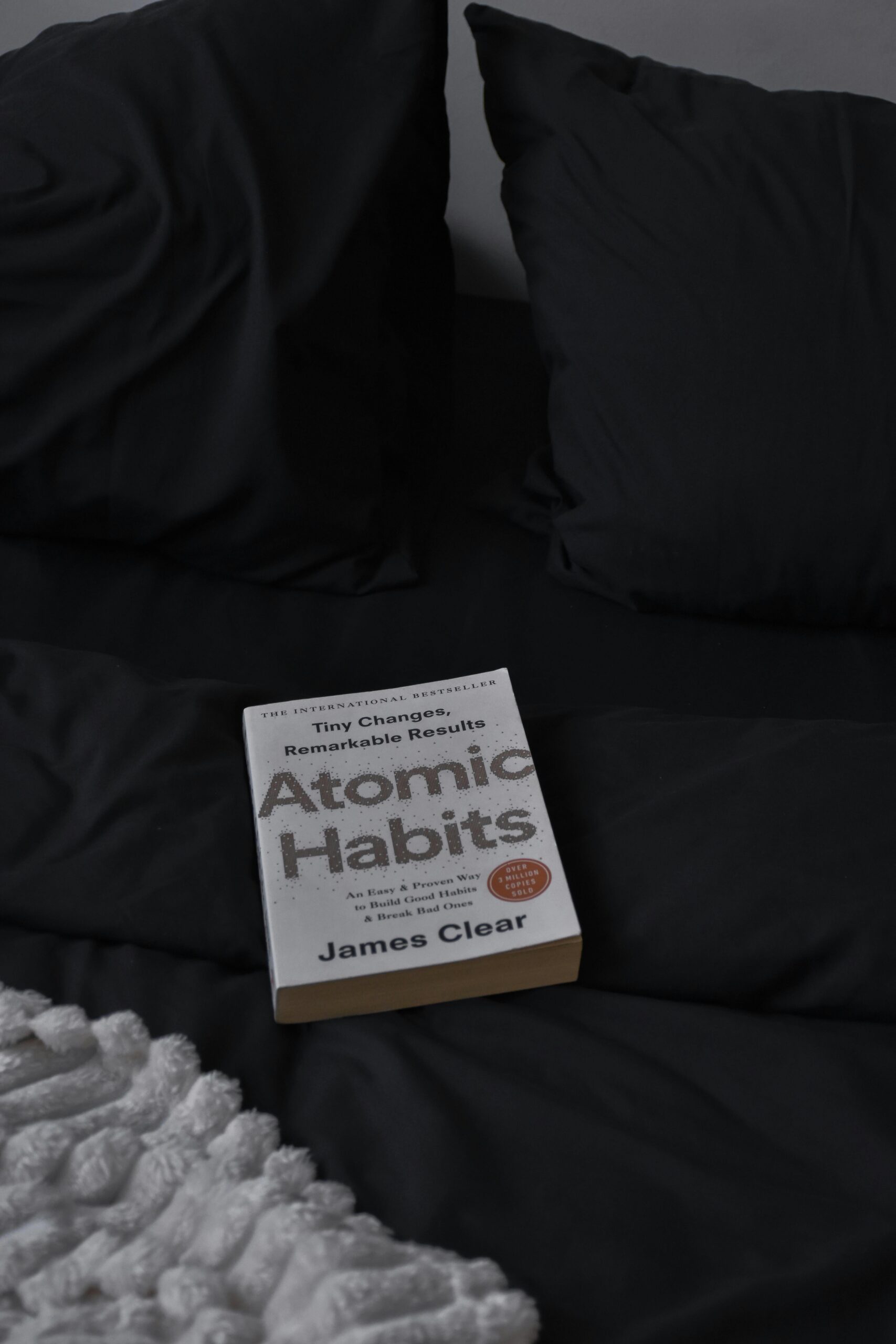
Atomic Habits — Honest Review (Is It Worth Reading?)
Introduction
Atomic Habits by James Clear has become one of the most talked-about books in the world of personal development. Whether you’re on TikTok, YouTube, or browsing Google, you will see people recommending it over and over again. But is the book truly worth reading, or is it just popular because of trends?
This honest review will help you understand what the book offers, who it helps, and whether it deserves the hype. If you’re wondering whether Atomic Habits should be your next read, this review will guide you through the key ideas, strengths, weaknesses, and practical lessons you can take into your daily life.
What Are Atomic Habits Really About?
At its core, Atomic Habits is a book about small improvements that create big change over time. Instead of focusing on motivation or giant goals, the author teaches readers how to build tiny habits that are easy to repeat every day.
The main message is simple:
Small changes, repeated consistently, lead to remarkable results.
This idea feels refreshing because most people fail not because their goals are too small, but because the actions they choose are too big, stressful, or unrealistic.
James Clear simplifies behavior change in a way anyone can understand, even if you’ve never read a self-help book before.
Key Ideas from the Book
1. Habits Are the Compound Interest of Self-Improvement
James Clear explains that habits work the way money grows through compound interest. A small 1% improvement every day might feel meaningless at first, but over months or years, it creates powerful results.
This idea is relatable because many people give up too early. We want immediate transformation, but progress comes quietly and slowly.
One of the most powerful ideas in Atomic Habits is the comparison between habits and compound interest. James Clear explains that just like money grows when interest accumulates over time, your daily actions also build momentum. But most people never realize this because the progress is invisible at first. When you start reading a little every day, exercising for ten minutes, writing one paragraph, or saving a small amount of money, the results are too small to notice. This early stage feels slow, boring, and even pointless — and this is exactly where most people quit.
But the truth is that change works in waves. Improvement doesn’t show up immediately. It shows up after weeks, months, or even years of repeated small behaviors. What looks like sudden success is often the result of hundreds of quiet, unnoticed steps taken in the background.
This concept also explains why bad habits are dangerous. Just as positive habits compound positively, negative ones compound negatively. Eating junk food “just today,” skipping reading “just today,” spending money carelessly “just today” — these don’t seem harmful in the moment. But small declines repeated over months create large setbacks.
The beauty of this idea is that anyone can improve. You don’t need to be talented, rich, or highly motivated. You just need to show up consistently, even in small ways. This removes pressure and makes growth feel achievable to everyone. When you understand that your tiny actions matter, you start treating every day like an investment in your future self.
The big lesson:
Small habits don’t feel powerful today, but they shape who you become tomorrow.
Takeaway:
If you become just 1% better each day, your life will be completely different in a year.
2. Focus on Systems, Not Goals
This point is one of the most valuable lessons in the entire book.
- A goal is the result you want.
- A system is the process that leads to that result.
Most people set goals like:
- “I want to lose weight.”
- “I want to make more money.”
- “I want to read more books.”
But very few people build the daily systems needed to achieve them.
Example:
If your goal is to become fit, your real success depends on your system — your daily eating habits, your workout routine, and your sleep schedule.
Takeaway:
Goals give direction. Systems create progress.
3. The Four Laws of Behavior Change
This is the heart of the book. James Clear breaks habits into four simple rules:
Law 1: Make It Obvious
Your habits should be visible and easy to start.
For example, if you want to read more, place a book on your bed or desk.
Law 2: Make It Attractive
You are more likely to stick to habits you enjoy or pair with something rewarding.
Law 3: Make It Easy
Remove friction.
If a habit is too hard or complicated, you won’t do it repeatedly.
Law 4: Make It Satisfying
We repeat actions that feel rewarding.
When progress feels good, habits stick naturally.
Takeaway:
These four laws give you a step-by-step formula for building or breaking any habit.
4. Identity-Based Habits
James Clear says that the most powerful way to change your habits is to change your identity, not your goals.
Examples:
- Instead of saying, “I want to read more,” say “I am a reader.”
- Instead of “I want to exercise,” say “I am the kind of person who takes care of my body.”
This shift is small but life-changing because it forces you to behave like the person you want to become.
Takeaway:
Your habits shape your identity — and your identity shapes your habits.
Who Should Read Atomic Habits?
This book is an excellent choice for:
✔ Students who struggle with focus
✔ Entrepreneurs building routines
✔ Anyone trying to break bad habits
✔ People who want to read, exercise, or learn consistently
✔ Anyone feeling stuck or unmotivated
✔ Busy people who want simple systems
✔ Beginners who don’t like complicated self-help books
The book is simple enough for beginners and practical enough for experienced readers.
What Makes Atomic Habits Worth Reading?
1. Clear, practical advice
James Clear writes in a way that even a 12-year-old can understand. No complicated theories, no confusing language.
One of the biggest reasons Atomic Habits stands out is the clarity of James Clear’s writing. Many self-help books are filled with complex theories, scientific explanations, and motivational language that sounds good but doesn’t translate into real change. In contrast, Atomic Habits is written so simply and directly that almost anyone can understand it — even a young reader or someone completely new to self-development.
James Clear avoids academic jargon. He doesn’t overwhelm you with complicated psychology or research terms. Instead, he breaks down behavior change into straight-to-the-point ideas that feel obvious once you read them. This simplicity is not accidental; it’s intentional. His goal is to make habit-building something everyone can learn, no matter their background, age, or lifestyle.
Another strength of the book is its step-by-step explanations. Clear doesn’t just tell you what to do — he explains why it works. For example, instead of telling you “build better habits,” he shows exactly how to design a habit that is easy to start, enjoyable to continue, and satisfying enough to repeat. This kind of breakdown makes the book practical, not just inspirational.
James Clear is also gifted at turning big ideas into actionable steps. You’re not left guessing how to apply a concept; he translates everything into simple actions like placing your gym clothes near your bed, reading just one page before sleeping, or reducing bad habits by adding friction. These instructions feel doable because they are small and realistic.
Many readers also appreciate how he balances ideas with relatable language. Whether he is explaining identity-based habits or the Four Laws of Behavior Change, he builds his arguments carefully and avoids overwhelming the reader. You never feel lost. You never feel pressured. Instead, you feel guided.
This clarity is what makes the book powerful for beginners and experienced readers alike. Even if you’ve read many self-help books, Atomic Habits gives you frameworks that feel fresh and easy to use. And if this is your first self-help book, you’ll understand everything without confusion.
In a world where most people feel overwhelmed with information, a book that delivers clear, practical advice is extremely valuable. Readers don’t want more theories; they want guidance that works. James Clear gives exactly that — and he does it in a warm, simple, conversational tone that invites you to take action rather than just think about it.
The ease of understanding is one of the biggest reasons people finish this book and actually apply what they learn. It is not a book you read once and forget. It is a book that stays with you because its advice is simple enough to remember yet powerful enough to transform your daily routine.
In short: The clarity of the book makes habit-building accessible to everyone — and that alone makes Atomic Habits worth reading.
2. Real-life examples
The book includes many relatable stories—athletes, writers, professionals—showing how small habits changed their lives.
One thing that sets Atomic Habits apart from other habit books is the way James Clear uses real-life examples to illustrate his ideas. Instead of drowning you in theory, he tells memorable stories that make the lessons easier to understand and apply.
Throughout the book, Clear shares examples from athletes, writers, entrepreneurs, musicians, doctors, and even historical figures. These stories help you see habits in action rather than just imagine them. They show how small decisions, repeated consistently, can create remarkable success — or failure.
For example, he talks about the British Cycling Team, which transformed from one of the worst cycling teams into Olympic champions by improving everything by just 1%. He explains how they painted the inside of their truck white so dust could be spotted easily, improved athlete sleep positions, and changed tiny aspects of bike design. These small improvements, stacked together, made them one of the most successful cycling teams in history.
He also shares the story of author John Steinbeck, who struggled to write daily until he reduced his goal to something tiny — writing just a few lines each day. This lowered pressure allowed him to build momentum, eventually completing some of the most celebrated novels in American literature.
Another memorable example involves professional athletes who optimized small parts of their training routines to gain long-term competitive advantages. He also highlights businesspeople who used small operational improvements to transform their companies.
These examples matter for one important reason: they prove that habits are not just ideas but real strategies used by real people to achieve big goals.
James Clear also includes examples of failures — how small bad habits lead to negative outcomes. Whether it’s a small financial decision repeated over years, a health habit ignored for too long, or a simple organizational problem left unaddressed, he shows how tiny actions accumulate over time.
These stories make the book feel alive and trustworthy. You don’t feel like someone is lecturing you; you feel like someone is guiding you through real-world lessons. The examples serve another purpose as well: they make the content easier to remember. Humans remember stories far better than instructions.
Because of these examples, readers do not just understand the theory of habits — they understand the application of habits. You can visualize yourself taking similar steps, building similar routines, and achieving similar improvements. The examples encourage readers to believe change is possible, even if it starts small.
In a world full of books that speak in abstract terms, Atomic Habits succeeds because it connects ideas to reality. The stories are simple, memorable, and powerful — and they make the lessons stick with you long after you finish reading.
In short: The real-life examples make the book relatable, inspiring, and easier to understand, which is a major reason the book is worth reading.
3. Easy to apply
You don’t need special tools or motivation. You can start applying the lessons today.
Another major reason Atomic Habits is worth reading is that it is incredibly practical. You don’t need expensive tools, complicated systems, or extreme motivation to apply what the book teaches. Everything is designed around the idea that small changes are easier to stick with than big ones.
James Clear emphasizes that habits should be easy to start. He removes the pressure of perfection and encourages simplicity. For example, instead of reading for an hour every day, he suggests reading just one page. Instead of working out for 45 minutes, try two minutes. Instead of cleaning your whole room, clean for just two minutes.
This lowers resistance and helps create momentum. When habits are small, they feel doable — even on lazy days.
Another reason the book’s lessons are easy to apply is because the strategies rely on psychology that everyone experiences. For example, habit stacking — pairing a new habit with something you already do — is a method anyone can use. If you want to meditate, do it after brushing your teeth. If you want to stretch, do it after waking up. If you want to read, do it after sitting on your bed.
These strategies don’t require willpower. They require placement.
James Clear also explains environmental design — changing your surroundings to support good habits. This is incredibly practical:
- If you want to read more, leave your book on your pillow.
- If you want to drink more water, keep a bottle on your desk.
- If you want to eat healthier, hide junk food and display fruit.
These small changes make habits automatic.
Another easy-to-apply idea is tracking your habits. Clear suggests marking an X on your calendar whenever you complete a habit. This visual cue motivates you to keep going because you don’t want to break the chain. You don’t need an app. You don’t need a system. A pen and paper will work.
The four laws of behavior change also make habit-building simple:
- Make it obvious
- Make it attractive
- Make it easy
- Make it satisfying
These laws are intuitive — you understand them immediately and can apply them instantly.
You can start implementing lessons from the book within minutes. And that’s rare for a self-help book.
Many readers finish Atomic Habits with practical steps they can apply the same day. The book doesn’t just motivate — it gives you tools that fit into your life effortlessly.
In short: The methods in Atomic Habits are simple, realistic, and easy to apply immediately, which makes the book incredibly valuable.
4. Works for any goal
Whether your goal is health, productivity, reading, business, or mindset, the principles apply universally.
One of the most powerful features of Atomic Habits is that its lessons apply to almost every area of life. Whether your goals are related to health, career, education, mindset, finances, or relationships, the principles of habit-building remain the same.
Unlike some self-help books that focus only on fitness, productivity, or mental health, Atomic Habits offers a universal system. The Four Laws of Behavior Change — make it obvious, attractive, easy, and satisfying — can be applied to almost anything you want to improve.
For example:
Fitness goals
- Want to exercise more? Start with two minutes of movement.
- Want to walk daily? Leave your shoes near the door.
- Want to drink more water? Keep a bottle next to you.
Career and productivity
- Want to focus better? Remove distractions from your working area.
- Want to write daily? Open your writing app as soon as you sit down.
- Want to learn a skill? Practice for two minutes daily, then increase slowly.
Reading and learning
- Want to read more books? Read one page before bed.
- Want to study regularly? Set a fixed study trigger (e.g., after breakfast).
- Want to retain more? Highlight and summarize as you read.
Mindset and mental health
- Want to think positively? Practice gratitude journaling for two minutes daily.
- Want to reduce stress? Meditate for one minute at first.
- Want better emotional awareness? Do a daily mood check-in.
Financial goals
- Want to save money? Start saving $1 a day.
- Want to control spending? Track one daily expense.
- Want to budget? Build a simple weekly habit of reviewing your spending.
Relationships
- Want better communication? Send one thoughtful message a day.
- Want stronger friendships? Schedule regular check-ins.
- Want a better marriage? End the night with one sentence of appreciation.
The book teaches that the size of the habit does not matter — the consistency does. Once a small habit becomes automatic, you can increase it gradually.
This universal applicability is what makes Atomic Habits one of the most influential self-help books of this generation. It does not limit itself to one aspect of life — it gives you a framework that can reshape every part of your life.
The book is also great for different personality types. Whether you’re highly disciplined or struggle with routines, the book’s methods can be tailored to your style. Even people who hate strict planning find the small-habit approach flexible and freeing.
In short:
Atomic Habits works because the principles are simple, adaptable, and effective for ANY goal you want to achieve.
Weaknesses of Atomic Habits (Honest Review)
No book is perfect. Here are areas where Atomic Habits might feel incomplete:
1. Some ideas feel repeated
Because the book is built on a simple concept (small habits), some chapters sound similar or repetitive.
2. Doesn’t address deep emotional issues
If your lack of progress comes from trauma, anxiety, or mental health struggles, this book may not fully solve those deeper concerns.
3. Requires discipline
Even though habits are small, you still need consistency. The book teaches the method, but YOU must build the discipline.
4. Not a motivational book
This is not a hype book. It’s practical, calm, logical, and sometimes slow.
Is Atomic Habits Worth Reading? (Final Verdict)
YES — absolutely worth reading.
For anyone who wants real improvement without overwhelming themselves, this book delivers practical solutions.
Here’s why it deserves the hype:
✔ Simple ideas that actually work
✔ Backed by psychology & real examples
✔ Helps build long-term habits
✔ Easy to start, even if you lack motivation
✔ Can change your life 1% at a time
If you’re serious about building better daily routines, improving your productivity, or transforming your habits, Atomic Habits is one of the best self-help books you can read.
Rating: ⭐⭐⭐⭐⭐ (5/5)
Practical, simple, and life-changing if applied correctly.
Key Takeaways
- Small habits create big change over time
- Systems matter more than goals
- Identity shapes habits
- Make habits obvious, attractive, easy, and satisfying
- Consistency beats motivation
Short Summary
Atomic Habits teaches how small daily changes can transform your life. The book offers clear strategies to build good habits, break bad ones, and create a system that leads to long-term success. It is practical, easy to understand, and useful for anyone looking to improve their life in a sustainable way.
Final Takeaway
If you want a book that helps you take real action, not just feel motivated for a day, Atomic Habits is must-read. It gives you a simple blueprint to redesign your habits, identity, and future.
Suggested Related Posts
- The Power of Habit — Summary & Lessons
- 10 Best Self-Help Books to Read in 2026
- How to Build a Daily Reading Habit (Beginner’s Guide)
- Why Small Changes Create Big Results