Introduction
There’s a quiet kind of sadness that comes with losing your love for reading.
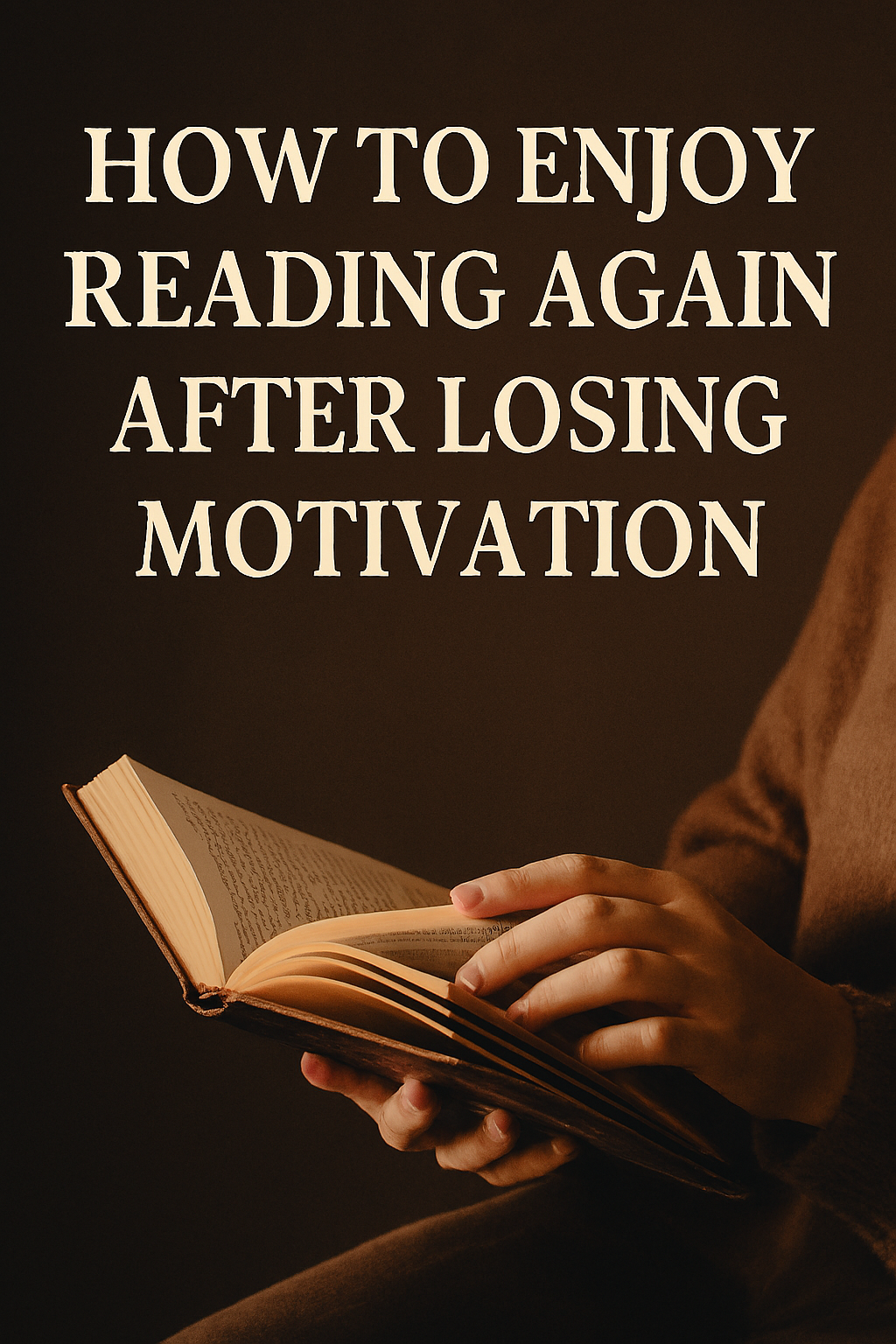
How to Enjoy Reading Again After Losing Motivation, Not the dramatic kind. Not the kind you talk about openly. Just a soft, lingering disappointment you feel when you walk past a bookshelf, scroll past book recommendations, or remember a time when reading felt effortless. A time when books weren’t something you tried to do—but something you naturally reached for.
Maybe you were the kid who hid under blankets with a flashlight.
Maybe you were the teenager who escaped into novels after school.
Maybe reading once felt like home.
And now?
Now books sit unfinished. Pages feel heavier than they should. You tell yourself you’ll read “when things slow down,” but they never really do. Weeks turn into months. Sometimes years.
What makes this especially frustrating is that the desire to read is still there. You want to enjoy reading again. You miss the feeling of being absorbed, of losing track of time, of thinking about characters long after closing the book. Yet every time you try to start, something blocks you—fatigue, distraction, boredom, guilt, or simply the feeling that your brain doesn’t work the way it used to.
This experience is far more common than most people admit.
Modern life is loud. Our attention is constantly pulled in dozens of directions. Phones, notifications, responsibilities, stress, and mental overload quietly reshape how our brains rest and focus. Reading, which once felt natural, now competes with endless digital stimulation that demands almost nothing from us in return.
So when reading starts to feel hard, many people assume the problem is them.
They think:
- “I just don’t have the attention span anymore.”
- “I guess I’m not a reader now.”
- “Something is wrong with me.”
But here’s the truth most people never hear:
Losing motivation to read doesn’t mean you stopped loving books.
It means your life, energy, and environment changed.
And no one ever taught you how to adapt your reading life to that change.
This article isn’t about forcing yourself to read more. It’s not about productivity, reading challenges, or trying to become the “ideal reader” you see online. It’s not about shaming yourself for unfinished books or setting goals you’ll abandon in a month.
It’s about gently reconnecting with reading in a way that feels realistic, forgiving, and human.
We’ll talk honestly about why reading motivation disappears—even for people who genuinely love books. We’ll look at the psychological and lifestyle factors that make reading feel harder than it used to, without blaming or oversimplifying. And most importantly, we’ll walk through practical, low-pressure ways to make reading enjoyable again—starting exactly where you are, not where you think you should be.
This is for the tired reader.
The distracted reader.
The reader who still loves books but doesn’t know how to reach them anymore.
You don’t need more discipline.
You don’t need better taste.
You don’t need to “try harder.”
You just need a different approach—one that respects your current life, your energy, and your attention.
If you’ve been waiting to feel like a reader again, this is your invitation to slow down, let go of the guilt, and start fresh—one honest page at a time.
This post is for you.
Not to shame you into reading more. Not to give you productivity hacks that feel like homework. But to help you enjoy reading again—in a way that fits your real life, your real energy, and your real attention span.
No guilt. No pressure. Just an honest path back to something you once loved.
Table of Contents
- Why Losing Motivation to Read Is So Common
- The Emotional Side of Falling Out of Love With Reading
- How Modern Life Quietly Destroys Reading Habits
- The Myth That “Real Readers” Read Every Day
- How to Restart Reading Without Forcing Yourself
- Choosing the Right Books When Motivation Is Low
- Formats That Make Reading Feel Easy Again
- How to Build a Reading Habit That Doesn’t Feel Like Work
- Reading When You’re Busy, Tired, or Mentally Drained
- Common Mistakes That Kill Reading Motivation
- Motivation Techniques That Actually Help
- Turning Reading Into a Comfort, Not a Chore
- Long-Term Habits for Lifelong Reading Joy
- Frequently Asked Questions
- A Gentle Ending (Because You Don’t Need a Lecture)
Why Losing Motivation to Read Is So Common
How to Enjoy Reading Again After Losing Motivation, most people assume losing interest in reading means something is wrong with them. That they’ve become lazy, distracted, or less intelligent.
That’s not what’s happening.
Reading motivation fades because life changes, not because you changed for the worse.
As kids or students, reading was often:
- Structured
- Encouraged
- Part of our identity
As adults, reading becomes optional. Competing with:
- Work deadlines
- Family responsibilities
- Financial stress
- Endless digital entertainment
When energy is limited, the brain chooses what feels easiest. Scrolling requires nothing. Reading asks for attention, imagination, and emotional presence.
That doesn’t mean reading is less enjoyable—it just means it requires a different kind of energy than your brain currently has.
The Emotional Side of Falling Out of Love with Reading
This part doesn’t get talked about enough.
Many people don’t stop reading because they don’t want to. They stop because reading reminds them of something painful.
- You used to read during a calmer phase of life
- You associate reading with who you used to be
- You feel guilty for not finishing books
- You compare yourself to past versions of yourself
That emotional weight makes opening a book feel uncomfortable—even if the story itself is good.
Sometimes the block isn’t about books at all. It’s about grief for a slower life, a quieter mind, or a version of yourself that had more space to breathe.
Acknowledging that matters. Because you can’t bully yourself into joy.
How Modern Life Quietly Destroys Reading Habits
1. Chronic Mental Overload
When your mind is constantly juggling tasks, decisions, and worries, reading can feel like too much—even if you want to read.
Your brain isn’t lazy. It’s tired.
2. Phone Addiction and Fragmented Attention
Phones train us to consume information in:
- Short bursts
- Bright visuals
- Instant rewards
Books do the opposite. They ask you to sit with ideas, characters, and slow builds.
When your attention span has been stretched thin, reading feels harder than it used to. That’s not a personal failure—it’s conditioning.
3. Reading Became “Self-Improvement”
At some point, many readers replace joy with obligation.
Suddenly you’re only reading:
- Productivity books
- Career-related content
- “Important” non-fiction
Fun gets pushed aside. Reading turns into another way to optimize yourself.
That’s a fast track to burnout.
The Myth That “Real Readers” Read Every Day
Let’s kill this myth gently and completely.
You do not need to read every day to be a reader.
You don’t need:
- A yearly book goal
- A morning reading routine
- A perfectly curated bookshelf
Reading is not a performance.
Some seasons of life allow for daily reading. Others don’t. That doesn’t mean you’ve lost your identity—it means you’re human.
Enjoy Reading Again After Losing Motivation, the moment you remove the pressure to be “a reader,” reading becomes possible again.
How to Restart Reading Without Forcing Yourself
If you’re waiting for motivation to magically return, you might be waiting a long time.
Motivation doesn’t come before action. It comes after small, positive experiences.
Here’s how to start without pushing yourself too hard.
Start Ridiculously Small
Not “I’ll read for an hour.”
Not “I’ll finish this book.”
Try:
- One page
- Two minutes
- One paragraph
Stop before you get tired.
This rewires your brain to associate reading with ease, not effort.
Let Yourself Quit Books Immediately
If a book doesn’t grab you, put it down.
You are not required to:
- Finish what you start
- Respect the author’s intentions
- Power through boredom
Reading is not a contract.
Quitting books is often the fastest way back to loving reading.
Choosing the Right Books When Motivation Is Low
When motivation is fragile, book choice matters more than usual.
Avoid These at First:
- Dense classics
- Heavy non-fiction
- Books you feel “should” read
Try These Instead:
- Short novels
- Light fiction
- Familiar genres
- Re-reads of old favorites
Re-reading is especially powerful. It removes uncertainty and cognitive effort, letting your mind relax into the story.
If you need ideas, consider adding internal links with anchor text like:
- best short books for busy readers
- easy fiction to get out of a reading slump
Formats That Make Reading Feel Easy Again
Reading doesn’t only mean printed books.
Audiobooks
Perfect for:
- Walking
- Commuting
- Cleaning
- Resting your eyes
Audiobooks still count. Anyone who says otherwise is gatekeeping joy.
Ebooks
E-readers reduce friction:
- Built-in lighting
- Adjustable font sizes
- Easy access anywhere
Short-Form Reading
- Short stories
- Essays
- Personal memoirs
You don’t need to commit to 400 pages to enjoy reading.
How to Build a Reading Habit That Doesn’t Feel Like Work
Habits stick when they feel rewarding, not impressive.
Tie Reading to Comfort
Read:
- Before bed
- With a warm drink
- In a quiet corner
Let reading become associated with rest, not discipline.
Create a “Low-Energy Reading List”
Have a list specifically for days when you’re tired:
- Light tone
- Simple language
- Short chapters
This removes decision fatigue.
Reading When You’re Busy, Tired, or Mentally Drained
You don’t need long stretches of time.
Try:
- Five minutes while waiting
- A few pages before sleep
- One chapter during lunch
Reading doesn’t require perfect conditions. It adapts when you let it.
Common Mistakes That Kill Reading Motivation
- Setting unrealistic goals
- Forcing yourself through boring books
- Comparing your reading speed to others
- Treating reading like productivity
- Waiting for “free time”
Reading thrives in imperfection.
Motivation Techniques That Actually Help
- Track time enjoyed, not books finished
- Keep books visible in your space
- Talk about what you’re reading with others
- Allow reading slumps without judgment
External link suggestions (anchor text only):
- psychology of habits
- research on attention and focus
- reading benefits backed by science
Turning Reading into a Comfort, not a Chore
The moment reading feels like an obligation, step back.
Ask:
- Does this book make me curious?
- Do I feel calmer after reading?
- Am I reading for myself—or to prove something?
Reading is allowed to be soft.
Long-Term Habits for Lifelong Reading Joy
- Rotate genres regularly
- Read for mood, not status
- Let reading ebb and flow
- Protect reading from comparison
A healthy reading life is flexible.
Frequently Asked Questions
1. Is it normal to lose interest in reading as an adult?
Yes. Extremely normal.
2. How long do reading slumps last?
Anywhere from weeks to years. They end when pressure ends.
3. Should I force myself to read daily?
No. Consistency grows from enjoyment, not force.
4. Are audiobooks “real reading”?
Yes. Full stop.
5. What if I can’t focus anymore?
Start small. Attention rebuilds slowly.
6. How do I choose books again?
Follow curiosity, not recommendations.
7. Is re-reading bad?
Not at all. It’s comforting and effective.
8. Can scrolling replace reading?
They serve different mental needs.
9. What if I never enjoy reading like before?
You might enjoy it differently—and that’s okay.
10. How do I stop feeling guilty about unread books?
Let them go. Books exist to serve you.
A Gentle Ending
Enjoy Reading Again After Losing Motivation. You don’t need to become the reader you once were.
You don’t need to catch up, make up for lost time, or prove anything.
Reading will wait for you—quietly, patiently—until the moment you’re ready to meet it again.
And when you do, it doesn’t have to look impressive. It just has to feel good.
One page is enough. One moment is enough.
You’re already closer than you think.
read more posts
How to Choose the Right Book for You (Beginner’s Guide)