
Introduction:
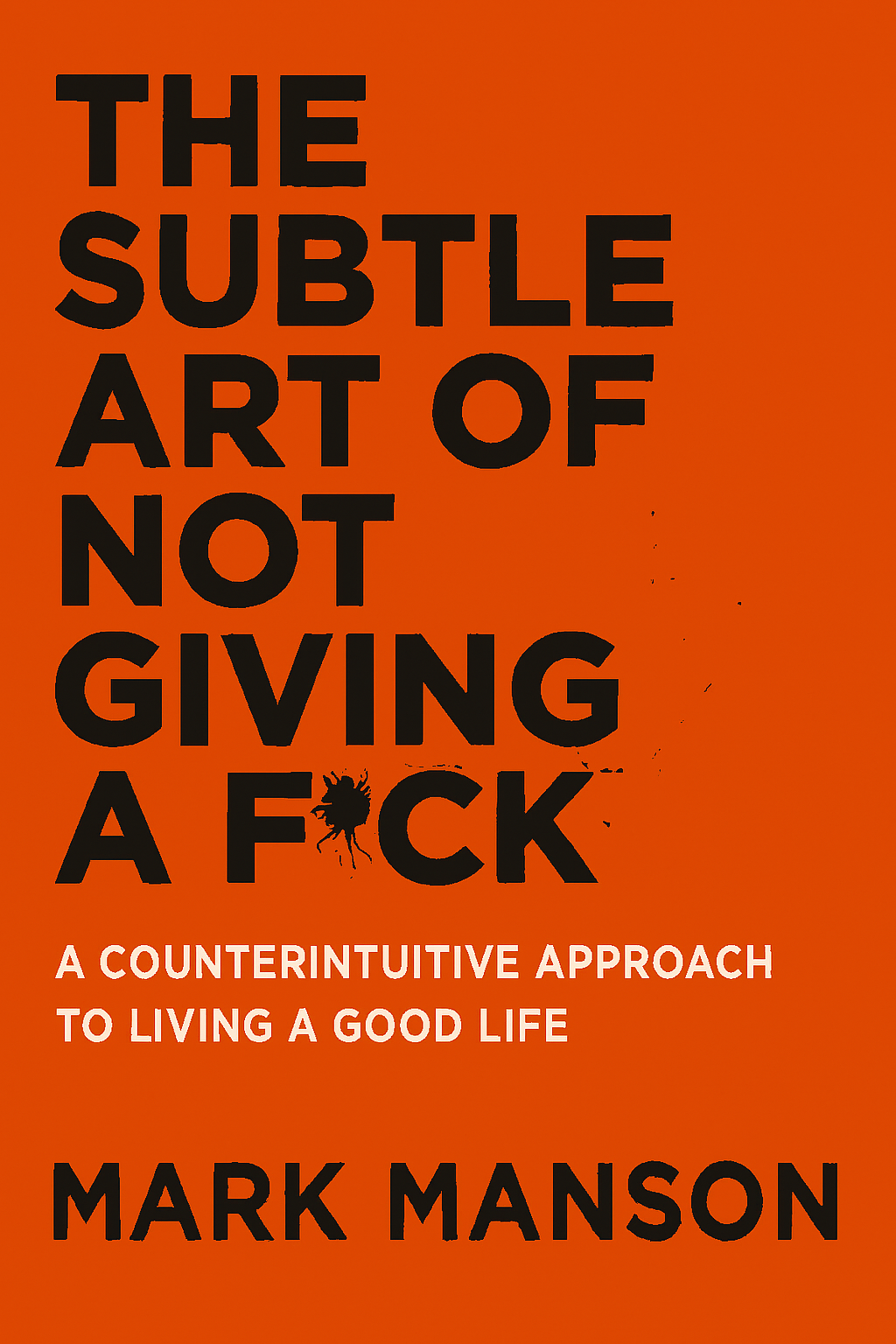
Why The Subtle Art of Not Giving a Fck* Struck a Nerve
Modern life is loud. Advice pours in from every direction—be positive, chase your dreams, hustle harder, fix your mindset, optimize your habits, compare yourself less, but also compete more. Somewhere between inspirational quotes and productivity hacks, many people end up feeling exhausted, anxious, and quietly disappointed. The Subtle Art of Not Giving a Fck* arrived at this exact moment and did something unexpected: it told readers to stop trying so hard to be happy.
At first glance, the title alone feels like rebellion. It cuts through the polite language of self-help and replaces it with blunt honesty. But beneath the shock value is a serious question: what if the constant pursuit of positivity is part of the problem? What if fulfillment doesn’t come from caring about everything, but from choosing carefully what deserves your energy?
Mark Manson’s book resonated because it challenged the emotional pressure many people live under. The pressure to be exceptional. The pressure to enjoy every moment. The pressure to never feel lost, bored, or dissatisfied. For readers drowning in expectations—both internal and external—the book offered relief. Not escape from responsibility, but freedom from unnecessary emotional weight.
Unlike traditional motivational books that promise transformation through optimism, The Subtle Art of Not Giving a Fck* argues that life is inevitably difficult. Pain, failure, and uncertainty are not glitches to be removed but realities to be faced. The question is not how to eliminate struggle, but how to choose struggles that are meaningful.
This summary explores the book’s core ideas in depth, without hype or exaggeration. You’ll learn what the book truly argues, why its message feels refreshing, where it falls short, and who will benefit most from reading it. If you’ve ever felt overwhelmed by advice telling you to “just think positive,” this breakdown will help you understand why this book struck such a powerful chord—and how its lessons can be applied responsibly in real life.
About the Author: Mark Manson
Mark Manson is a writer and blogger known for his direct, conversational style and willingness to challenge conventional wisdom. Before publishing The Subtle Art of Not Giving a Fck*, he built a large online following by writing essays about relationships, personal values, and self-development—often with a tone that blended humor, honesty, and skepticism.
What sets Manson apart is his rejection of traditional self-help optimism. Rather than presenting himself as a guru with perfect answers, he writes from the position of someone who has struggled, failed, and questioned his own beliefs. His work emphasizes responsibility, personal values, and psychological realism.
Manson’s credibility comes from clarity rather than authority. He does not rely on exaggerated success stories or dramatic promises. Instead, he grounds his arguments in everyday experiences, psychological research, and philosophical ideas. This approach makes his writing accessible while still intellectually engaging, especially for readers tired of superficial motivation.
Book Summary: A Deep Exploration of the Core Ideas
The Problem With Constant Positivity
The book opens by challenging one of modern culture’s most cherished beliefs: that we should always strive to feel good. Manson argues that the obsession with positivity often backfires. When happiness becomes a constant goal, any negative emotion starts to feel like a failure. Anxiety becomes something to fix. Sadness becomes a sign of weakness. Dissatisfaction becomes evidence that something is wrong with you.
According to Manson, this mindset creates a paradox. The more you chase happiness, the more aware you become of its absence. This awareness intensifies dissatisfaction rather than relieving it. The book reframes negative emotions as normal and even necessary. Pain is not a malfunction; it is part of being human.
Not Giving a F*ck Does Not Mean Indifference
One of the most misunderstood aspects of the book is its title. “Not giving a fck” does not mean apathy, laziness, or moral detachment. Manson is clear that everyone gives a fck about something. The issue is not whether you care, but what you choose to care about.
Life offers endless things to worry over: status, approval, comparisons, minor inconveniences, online opinions. Trying to care about everything drains emotional energy. The book argues for selectivity. By choosing fewer values and commitments, individuals can invest their attention more deeply and meaningfully.
Values as the Foundation of Meaning
A central theme of the book is the importance of values. Manson argues that many people suffer not because they lack success, but because they hold poor values. Chasing pleasure, popularity, or constant validation leads to fragile satisfaction. These values depend heavily on external factors beyond personal control.
In contrast, values such as honesty, responsibility, growth, and commitment are internal. They can be lived regardless of circumstances. The book emphasizes that meaningful values often involve discomfort. Choosing responsibility means accepting blame. Choosing growth means facing failure. Meaning, according to Manson, is built through struggle aligned with values, not through comfort.
Embracing Responsibility Without Self-Blame
One of the book’s more nuanced arguments is the distinction between fault and responsibility. Manson suggests that many aspects of life are unfair and beyond personal control. Trauma, upbringing, and circumstance play powerful roles in shaping experiences. However, even when something is not your fault, it is still your responsibility to deal with it.
This perspective avoids both victimhood and self-punishment. It encourages agency without denying reality. Responsibility becomes a form of empowerment: you may not control what happened, but you control how you respond.
The Feedback Loop From Hell
Manson introduces the idea of a negative feedback loop that worsens emotional suffering. For example, feeling anxious about being anxious or ashamed about being ashamed. This layering of judgment creates a cycle where emotions intensify rather than resolve.
The book argues that accepting negative feelings often reduces their power. Allowing discomfort to exist without judgment prevents the spiral of self-criticism. This idea aligns with psychological principles found in mindfulness and acceptance-based therapies.
Failure as a Path to Growth
Rather than avoiding failure, Manson frames it as essential. Progress requires error. Learning requires mistakes. Success is often built on a series of failures that refine judgment and resilience.
The book challenges the idea that confidence must come before action. Instead, it argues that confidence is often the result of surviving failure. This reframing encourages readers to act imperfectly rather than waiting for certainty.
Mortality and Meaning
One of the book’s most reflective sections deals with mortality. Manson argues that awareness of death clarifies priorities. When time is limited, trivial concerns lose importance. Mortality forces honesty about what truly matters.
Rather than presenting this idea in a depressing way, the book uses it as a grounding tool. Meaning becomes sharper when life is recognized as finite.
Key Themes and Messages
1. Selective Caring Is Healthy, Not Selfish
One of the most important ideas in The Subtle Art of Not Giving a Fck* is that caring less is not the same as caring about nothing. Mark Manson argues that emotional energy is limited. When people try to care about everything—other people’s opinions, social media approval, constant success, being liked by everyone—they end up overwhelmed, anxious, and mentally exhausted. The problem is not caring too little, but caring about too many things that don’t truly matter.
Modern culture often encourages overinvestment in trivial issues. Online validation, comparisons, minor inconveniences, and imagined expectations slowly drain attention away from meaningful priorities. Manson challenges readers to ask a difficult question: What is actually worth my concern? By answering this honestly, individuals can redirect energy toward fewer but more meaningful commitments.
Selective caring is presented as an act of clarity, not arrogance. It allows people to set emotional boundaries and protect their mental health. When everything matters, nothing truly does. When only a few things matter, focus improves and emotional stability increases. This idea is especially relevant in an age of constant notifications, opinions, and pressure to perform.
The book also emphasizes that selective caring requires courage. Choosing what not to care about often invites criticism. However, without this selectivity, individuals become reactive rather than intentional. By caring deeply about values, relationships, and responsibilities that align with personal meaning, people gain resilience. Life becomes less about constant approval and more about purpose-driven choices.
2. Discomfort Is Unavoidable—and Often Necessary
A central message of the book is that discomfort is not a sign of failure. Pain, frustration, and uncertainty are built into the human experience. Many self-help philosophies promise happiness through comfort, ease, or positive thinking. Manson rejects this approach, arguing that the avoidance of discomfort often creates deeper dissatisfaction.
Growth, according to the book, requires struggle. Meaningful achievements—healthy relationships, personal growth, professional mastery—come with stress, doubt, and occasional failure. Attempting to eliminate discomfort leads to stagnation. When people avoid hard conversations, challenging goals, or emotional risk, they may feel temporarily safe, but long-term fulfillment suffers.
Manson reframes suffering as a question of choice. While pain is inevitable, the type of pain matters. Struggling for shallow goals creates empty frustration. Struggling for meaningful values creates purpose. This distinction shifts the focus from avoiding discomfort to choosing which discomfort is worth enduring.
The book also challenges the idea that happiness is the absence of problems. Instead, happiness comes from solving meaningful problems. Once one challenge is resolved, another appears. Life is not a destination of comfort but a continuous process of engagement. Accepting this reality reduces disappointment and unrealistic expectations.
By embracing discomfort rather than fearing it, readers develop emotional resilience. Difficult emotions lose their power when they are no longer treated as enemies. This mindset encourages action, honesty, and long-term satisfaction rather than short-term relief.
3. Values Shape Experience More Than Circumstances
Another foundational theme of The Subtle Art of Not Giving a Fck* is the role of values in shaping life experience. Manson argues that many people suffer not because they lack success, but because they pursue values that are fragile or external. Values like popularity, constant pleasure, and validation depend heavily on factors outside personal control. When those values are threatened, emotional stability collapses.
In contrast, internal values—such as honesty, responsibility, discipline, and growth—remain accessible regardless of circumstances. These values do not guarantee comfort, but they create consistency. When people act in alignment with internal values, setbacks feel meaningful rather than devastating.
The book encourages readers to examine their values honestly. Not all values are healthy. Some create endless dissatisfaction because they rely on comparison or perfection. For example, valuing constant happiness leads to frustration whenever sadness appears. Valuing success without defining what success means leads to chronic insecurity.
Manson emphasizes that good values are reality-based, socially constructive, and within personal control. They encourage responsibility rather than entitlement. Choosing better values changes how success and failure are interpreted. Failure becomes feedback instead of identity. Success becomes a byproduct rather than a validation tool.
This theme highlights that external achievements alone do not create fulfillment. Without clear values, accomplishments feel empty. With strong values, even difficult paths feel worthwhile. The book positions values as the foundation upon which emotional health and meaning are built.
4. Responsibility Creates Freedom, Not Pressure
One of the most misunderstood ideas in the book is its emphasis on responsibility. Manson does not argue that people are to blame for everything that happens to them. Instead, he draws a careful distinction between fault and responsibility. Many life circumstances—family background, trauma, economic conditions—are not chosen. However, how individuals respond to these circumstances remains within their control.
Avoiding responsibility often feels comforting in the short term. Blame provides temporary relief by shifting accountability outward. But over time, this mindset creates helplessness. When everything is someone else’s fault, personal agency disappears. Manson presents responsibility as the pathway back to control.
Taking responsibility does not mean denying injustice or hardship. It means acknowledging reality and choosing action over resentment. Responsibility empowers individuals to make decisions, set boundaries, and change direction. It restores a sense of ownership over life.
The book also challenges the idea that responsibility is burdensome. While it does involve effort, it also brings clarity. When individuals accept responsibility for their values, actions, and reactions, they stop waiting for external rescue. Progress becomes possible.
This theme reinforces the book’s broader message: freedom is not found in avoiding problems, but in choosing how to face them. Responsibility, when understood correctly, is not punishment—it is autonomy.
Pros and Cons: A Balanced Evaluation
Pros
- Honest and relatable tone
- Challenges shallow self-help narratives
- Encourages responsibility and self-awareness
- Accessible language with depth
Cons
- Profanity may distract some readers
- Ideas can feel repetitive at times
- Not ideal for readers seeking structured plans
- Tone may feel dismissive to some audiences
Who This Book Is For (And Who It’s Not)
Best suited for:
- Readers overwhelmed by constant self-improvement
- Those seeking emotional clarity
- People open to uncomfortable truths
Not ideal for:
- Readers preferring gentle motivation
- Those sensitive to blunt language
- Anyone looking for step-by-step frameworks
Practical Takeaways and Lessons
- Choose values consciously
- Accept discomfort without judgment
- Limit emotional investment in trivial matters
- Take responsibility for responses
- Redefine success around meaning, not pleasure
Comparison With Similar Books
Compared to Atomic Habits, which focuses on behavior systems, Manson’s book focuses on emotional orientation. Unlike Think Positive–style works, it embraces negativity as informative rather than harmful. It complements philosophical works like Stoic writings, though with a modern voice.
Frequently Asked Questions
Is the book anti-positivity?
No. It critiques forced positivity, not genuine optimism.
Does it promote apathy?
No. It promotes intentional caring.
Is it practical or philosophical?
It blends both, leaning philosophical.
Is it suitable for beginners?
Yes, especially those new to self-reflection.
Is the language necessary?
It serves tone, but may not suit everyone.
Final Verdict and Recommendation
The Subtle Art of Not Giving a Fck* succeeds because it tells readers what many already feel but rarely hear: life is imperfect, and that’s okay. Its strength lies not in offering solutions to every problem, but in reframing how problems are viewed. When read thoughtfully, the book encourages responsibility, honesty, and emotional maturity.
It is not a universal answer, nor does it claim to be. But for readers willing to question shallow optimism and confront uncomfortable truths, it offers clarity that feels grounded and human.