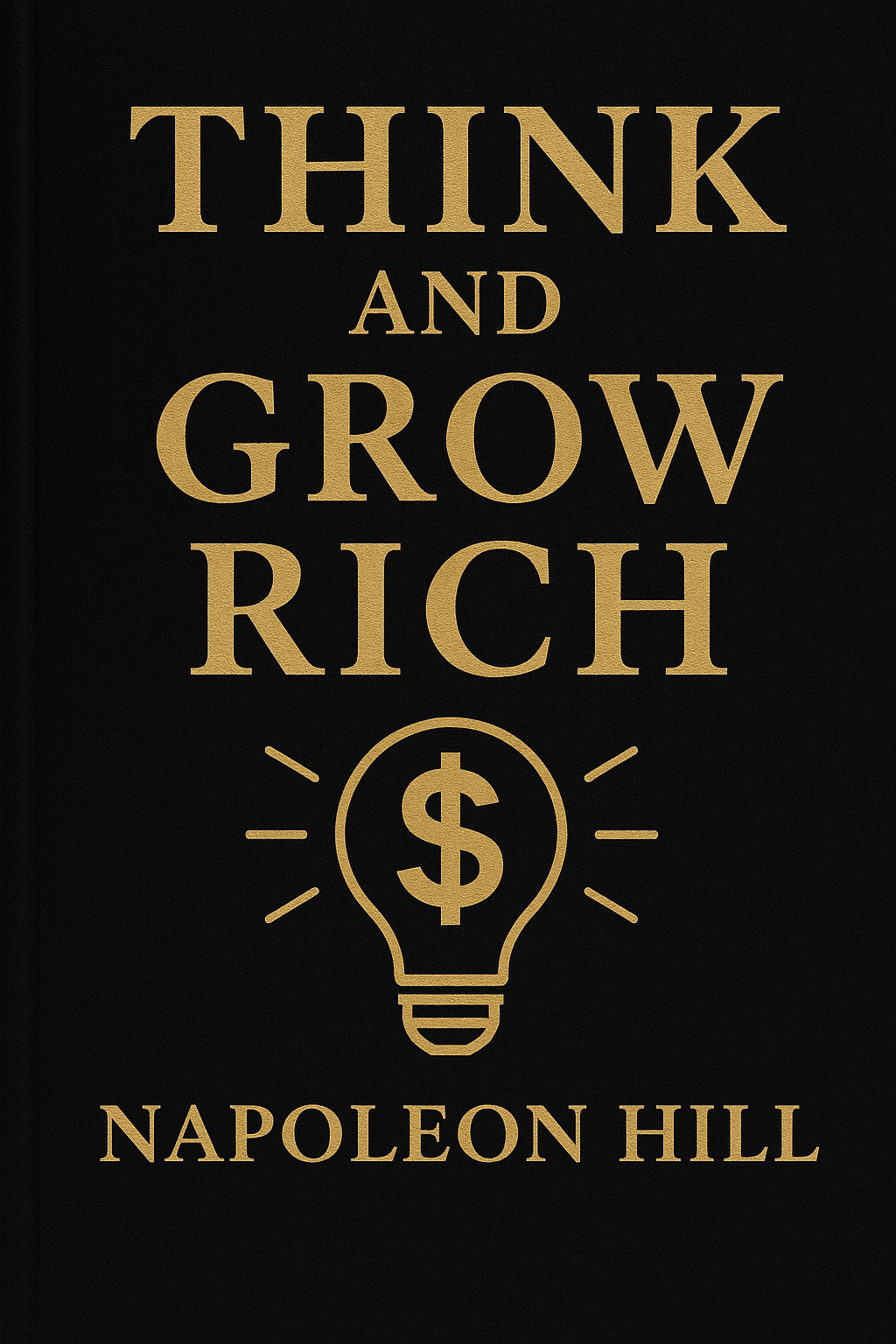
A deep, practical summary of Think and Grow Rich by Napoleon Hill, explaining its core success principles, mindset lessons, and real-world relevance today.
Introduction:
Why Think and Grow Rich Still Matters in a Modern World
Few personal development books have influenced generations the way Think and Grow Rich has. First published in 1937, this book has sold over 100 million copies worldwide and continues to shape the thinking of entrepreneurs, professionals, creatives, and anyone searching for lasting success. What makes this remarkable is not just its age, but its continued relevance in a world that looks nothing like the one Napoleon Hill lived in.
At its core, Think and Grow Rich is not a book about money alone. That is one of the most common misunderstandings. While financial success is an important theme, Hill’s real focus is the psychology of achievement—the inner rules that govern why some people consistently reach their goals while others struggle despite having talent, education, or opportunity.
Many readers come to this book feeling stuck. They may work hard but see little progress. They may have big dreams but lack clarity, confidence, or direction. Others feel overwhelmed by external obstacles: economic uncertainty, competition, fear of failure, or a lack of resources. Hill speaks directly to these pain points by shifting attention inward. His argument is simple yet challenging: success begins with thought, belief, and purpose before it ever appears in the material world.
What separates Think and Grow Rich from modern motivational content is its depth. Hill spent over 20 years studying more than 500 successful individuals, including Andrew Carnegie, Henry Ford, Thomas Edison, and many others. He was not interested in shortcuts or surface-level habits. Instead, he searched for universal principles that could be applied by anyone, regardless of background.
This book matters today because the struggle it addresses is timeless. People still wrestle with self-doubt. They still lack clear goals. They still allow fear, procrastination, and negative influences to sabotage their potential. Technology may have changed, but human psychology has not.
By reading this summary, you will gain:
- A clear understanding of the core principles behind lasting success
- Insight into how mindset shapes outcomes
- Practical lessons you can apply to career, business, and personal goals
- A realistic view of the book’s strengths and limitations
Rather than treating Think and Grow Rich as a magical formula, this article approaches it as a serious work on personal philosophy and disciplined thinking. Whether you are encountering the book for the first time or revisiting it with fresh eyes, the ideas explored here will help you understand why it remains one of the most influential success books ever written.
About the Author: Napoleon Hill
Napoleon Hill was an American writer born in 1883. He is best known for his work in personal development and success philosophy, but his influence extends far beyond publishing. Hill’s career took a defining turn when industrialist Andrew Carnegie challenged him to study successful people and identify the principles behind their achievements.
Hill spent decades interviewing business leaders, inventors, politicians, and thinkers. His approach was methodical rather than purely inspirational. He analyzed patterns in behavior, decision-making, mindset, and habits. The result was a philosophy built not on theory alone, but on observation and synthesis.
His writing style is direct and instructional. Hill often speaks with authority, sometimes even with moral certainty, which reflects the era in which he wrote. While some language may feel dated, his underlying message remains powerful. He emphasizes discipline, persistence, and clarity of purpose—qualities that are still essential today.
Hill’s credibility comes from the scope of his research and the consistency of his message across multiple works. Think and Grow Rich is widely regarded as his most important contribution, forming the foundation of modern success literature.
Book Summary: Core Ideas and Structure
Rather than telling a single story, Think and Grow Rich is organized around principles. Each chapter focuses on a mental or behavioral law that Hill believed governed success.
1. Desire: The Starting Point of All Achievement
Hill begins with desire, not wishful thinking, but a burning, obsessive desire backed by commitment. According to him, vague hopes produce vague results. Clear, emotionally charged goals create focus and persistence.
He emphasizes:
- Defining exactly what you want
- Determining what you are willing to give in return
- Setting a deadline
- Creating a plan and acting immediately
This principle teaches that clarity precedes achievement. Without a precise aim, effort becomes scattered.
2. Faith: Belief as a Creative Force
Faith, in Hill’s framework, is confidence in one’s ability to achieve a goal. He argues that repeated thoughts, whether positive or negative, shape belief. Over time, belief influences action.
This chapter highlights:
- The power of self-suggestion
- The importance of affirmations when used with emotion
- The danger of internalized doubt
Hill does not frame faith as blind optimism, but as mental conditioning that aligns behavior with intention.
3. Autosuggestion: Influencing the Subconscious Mind
Autosuggestion refers to the deliberate feeding of thoughts into the subconscious. Hill believed the subconscious acts on dominant ideas, whether constructive or destructive.
The key lesson here is responsibility for one’s mental environment. Repeated negative thinking creates self-imposed limits, while disciplined focus strengthens confidence and direction.
4. Specialized Knowledge
Hill makes a crucial distinction between general education and specialized knowledge. Success does not require knowing everything; it requires knowing what matters and how to apply it.
He stresses:
- Continuous learning
- Leveraging experts and collaboration
- Practical application over credentials
This principle is especially relevant today in a world overflowing with information.
5. Imagination: The Workshop of the Mind
Imagination is where ideas take shape before becoming reality. Hill credits imagination as the source of innovation, wealth, and progress.
He identifies two forms:
- Synthetic imagination: combining existing ideas
- Creative imagination: intuition and inspiration
Every product, business, or invention begins as an imagined concept.
6. Organized Planning
Desire and imagination require structure. Hill emphasizes planning as a flexible, evolving process rather than a rigid blueprint.
He encourages:
- Taking action even with imperfect plans
- Adapting quickly when setbacks occur
- Collaborating with others
Failure, in his view, is feedback rather than defeat.
7. Decision: The Mastery of Procrastination
Successful people make decisions quickly and change them slowly. Unsuccessful people hesitate and doubt themselves.
Hill connects indecision to fear—fear of criticism, failure, or responsibility. This chapter urges readers to develop decisiveness as a skill.
8. Persistence
Persistence is sustained effort despite obstacles. Hill presents persistence as a habit that can be cultivated through purpose, confidence, and discipline.
Without persistence, even strong plans collapse under pressure.
9. The Master Mind
The “Master Mind” concept refers to coordinated effort between two or more people aligned toward a common goal. Hill believed collective intelligence multiplies individual strength.
This idea highlights collaboration, mentorship, and shared vision.
10. The Mystery of Sex Transmutation
One of the most discussed chapters, Hill argues that creative and emotional energy can be redirected into productive work. While the language reflects its time, the broader point is about channeling intense emotion into focused action.
11. The Subconscious Mind
Hill reinforces the idea that emotions influence outcomes. Positive emotions strengthen belief, while negative ones undermine progress.
12. The Brain
The brain is described as a broadcasting and receiving station for thought. While metaphorical, this chapter reinforces the power of environment and mental input.
13. The Sixth Sense
Hill describes intuition as a guiding faculty developed through experience and alignment with purpose. While abstract, it points to the value of inner awareness and reflection.
Key Themes and Messages
Mindset Shapes Reality
Hill’s central message is that thoughts influence actions, and actions shape outcomes. While external conditions matter, internal orientation determines how people respond to those conditions.
Clarity Creates Power
Undefined goals drain energy. Clear objectives focus attention and effort. This theme runs throughout the book and connects desire, planning, and persistence.
Self-Discipline Is Non-Negotiable
Success is not accidental. Hill repeatedly emphasizes habits, discipline, and emotional control as foundations for achievement.
Collaboration Accelerates Growth
The Master Mind principle reinforces the idea that success rarely occurs in isolation. Learning from others shortens the path forward.
Pros and Cons
Pros
- Deep focus on mindset and psychology
- Timeless principles applicable across fields
- Encourages personal responsibility
- Structured, principle-based framework
Cons
- Language and examples can feel dated
- Some concepts lack scientific grounding
- Repetition may challenge impatient readers
- Not ideal for those seeking quick tactics
Who This Book Is For (And Not For)
Ideal For
- Entrepreneurs and business owners
- Professionals seeking direction
- Readers interested in mindset and philosophy
- Long-term personal development seekers
Not Ideal For
- Readers wanting step-by-step financial formulas
- Those uncomfortable with abstract concepts
- People seeking instant results
Practical Takeaways and Lessons
- Define one clear goal and commit emotionally
- Monitor internal dialogue daily
- Replace passive consumption with focused learning
- Build alliances with purpose-driven people
- Treat setbacks as data, not failure
Comparison With Similar Books
Compared to The 7 Habits of Highly Effective People, Hill focuses more on belief than behavior. Unlike Rich Dad Poor Dad, which emphasizes financial literacy, Think and Grow Rich concentrates on mental foundations. Its influence is more philosophical than tactical.
FAQs
Is Think and Grow Rich only about money?
No. It focuses on personal achievement in all areas of life.
Is the advice still relevant today?
Yes, especially the psychological principles.
Do I need to read the full book after this summary?
The full book offers deeper reflection, but this summary captures the core ideas.
Is it based on real research?
Hill’s work is observational rather than scientific.
How long does it take to apply these principles?
Results depend on consistency and discipline over time.
Final Verdict and Recommendation
Think and Grow Rich remains one of the most influential books ever written on success and personal development. While some elements reflect its era, the foundational ideas about mindset, clarity, and persistence are timeless. This is not a book for shortcuts, but for readers willing to examine their thinking and take responsibility for their direction.
For those ready to commit to long-term growth, this book is not just worth reading—it is worth studying.
other articles on other books