
Table of Contents
- Introduction: Why So Many People Struggle to Read Today
- What “Reading Difficulty” Really Means in the Modern World
- How the Way We Live Has Changed the Way We Read
- The Hidden Impact of Digital Distractions
- Short-Form Content vs. Deep Reading
- How Attention, Focus, and Reading Are Connected
- The Role of Stress, Fatigue, and Mental Overload
- Why Reading Feels Hard Even for Smart People
- Common Reading Myths That Make the Problem Worse
- The Science Behind Reading Effort and Cognitive Load
- Signs That Your Reading Skills Are Under Pressure
- Common Mistakes People Make When Trying to Read More
- How to Fix Reading Difficulties Step by Step
- Building a Sustainable Reading Habit
- How to Improve Focus Without Forcing Yourself
- Reading Strategies That Actually Work Today
- Digital Reading vs. Physical Reading: What to Know
- How Long-Term Reading Improves Life Skills
- Benefits of Fixing Your Reading Struggles
- Frequently Asked Questions (FAQs)
- Conclusion: Reading Can Feel Easy Again
1. Introduction:
Why Reading Feels Hard Today — and Why This Matters More Than Ever
Reading has always been one of the most powerful ways humans learn, think, and grow. Yet today, a growing number of people feel frustrated, confused, or even guilty because reading no longer feels easy. Books go unfinished, articles are skimmed, and focus disappears after just a few paragraphs. This experience is so common that many assume something is wrong with them — but that assumption is incorrect.
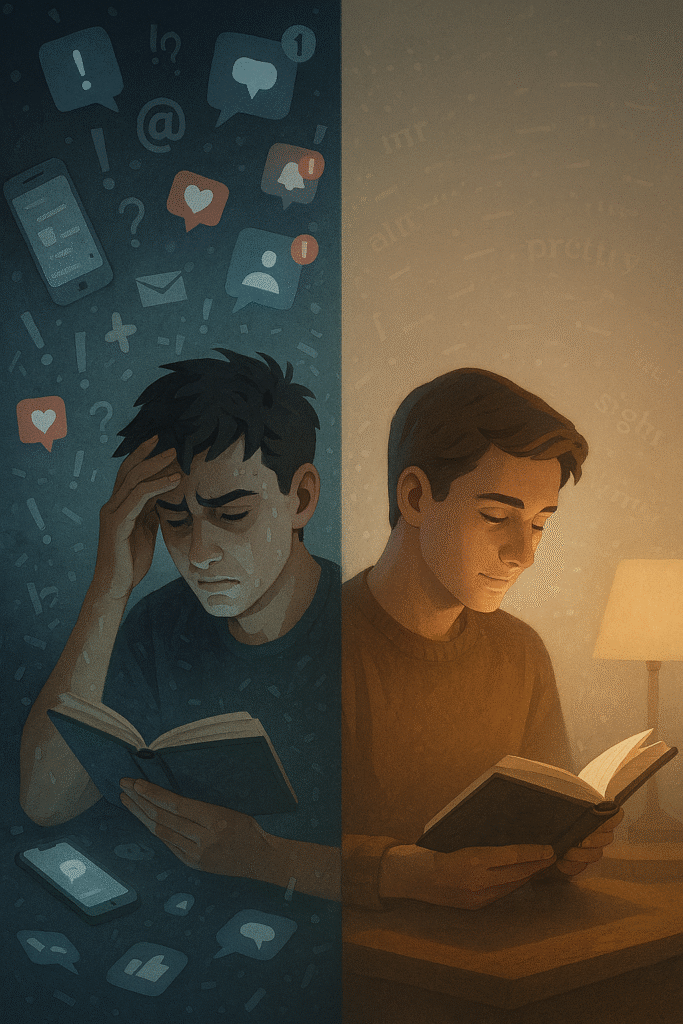
The truth is simple and important: reading feels harder today because the world has changed, not because readers have failed.
Modern life places constant demands on attention. Screens compete for focus, information arrives in fragments, and speed is rewarded more than depth. Over time, these conditions reshape how the brain processes information. As a result, activities that require sustained attention — like reading — begin to feel unusually difficult, even for intelligent, motivated people.
This topic matters because reading is not just about books. It directly affects:
- How well we learn and retain information
- Our ability to think clearly and critically
- How deeply we understand complex ideas
- Our capacity to focus without constant distraction
- Long-term personal and intellectual growth
When reading becomes difficult, learning becomes shallow. When learning becomes shallow, decision-making, creativity, and understanding suffer.
This article is written to provide real value, not quick fixes or exaggerated claims. You will learn:
- Why reading feels harder now than it did in the past
- How digital habits quietly weaken reading focus
- Why this struggle is normal and widely shared
- Common mistakes that make reading feel even harder
- Practical, realistic ways to rebuild reading focus step by step
Whether you are a student, professional, or lifelong learner, understanding this issue is the first step toward fixing it. Reading does not have to feel like a struggle. With the right perspective and approach, it can become enjoyable, meaningful, and mentally rewarding again.
2. What “Reading Difficulty” Really Means in the Modern World
When people search for “reading difficulty” today, they often assume it refers to a serious inability to read or understand words. In reality, modern reading difficulty is very different from traditional definitions. Most people who experience it can read perfectly well — the challenge lies in sustaining focus, comprehension, and mental engagement over time.
In the modern world, reading difficulty usually means:
- You understand individual words but lose the meaning of paragraphs
- Your eyes keep moving, but your mind drifts elsewhere
- You reread the same lines multiple times without clarity
- Reading feels mentally tiring much faster than it used to
- You prefer summaries or short content instead of full texts
This form of reading difficulty is situational and environmental, not a personal failure or lack of intelligence.
Reading Difficulty Is About Attention, Not Ability
One of the most important points to understand is this:
Modern reading difficulty is rarely caused by low intelligence or poor education. It is usually caused by weakened attention control.
Today’s environment constantly trains the brain to switch tasks quickly:
- Checking messages while watching videos
- Scrolling while half-reading headlines
- Consuming information in short, disconnected pieces
Over time, the brain adapts to this pattern. When faced with long-form text that requires patience and continuity, the brain reacts with discomfort, restlessness, or boredom. This reaction is often mistaken for a lack of interest or ability.
How Modern Reading Difficulty Differs From the Past
In the past, reading difficulty was commonly linked to:
- Limited access to education
- Language barriers
- Lack of reading exposure
Today, it is more often linked to:
- Constant digital stimulation
- Information overload
- Multitasking habits
- Reduced tolerance for mental effort
This shift explains why many people who once enjoyed reading now struggle with it.
Why This Definition Matters for Readers
Understanding what reading difficulty really means helps readers in several ways:
- It removes unnecessary self-blame
- It clarifies that the problem is fixable
- It shifts the focus from “forcing reading” to retraining attention
- It encourages realistic, sustainable improvement
Reading difficulty in the modern world is not a permanent condition. It is a response to how attention is used daily. Once this is understood, readers can take the right steps to rebuild focus and rediscover the value of deep, meaningful reading.
3. How the Way We Live Has Changed the Way We Read
To understand why reading feels harder today, it is essential to look beyond books and focus on how modern lifestyles shape attention, thinking, and information processing. Reading does not happen in isolation. It is deeply influenced by daily habits, environments, and the way the brain is trained to interact with information.
The way we live today is fundamentally different from how people lived even one or two decades ago. These changes have quietly but significantly altered how we read, how long we can focus, and how much mental effort we can comfortably sustain.
The Shift From Depth to Speed
Modern life rewards speed. Information is expected to be:
- Instant
- Short
- Easy to consume
- Immediately useful
News updates, social feeds, messages, and notifications deliver information in small, fast-moving pieces. This constant exposure trains the brain to prioritize quick understanding over deep comprehension.
Reading, however, requires:
- Slowing down
- Following ideas across multiple paragraphs
- Holding information in the mind
- Building meaning gradually
When speed becomes the default mode of thinking, reading naturally feels slow and demanding.
Fragmented Attention as a Daily Norm
Many people rarely do just one thing at a time anymore. A typical day may include:
- Reading messages while watching videos
- Skimming articles while checking notifications
- Switching between tasks every few minutes
This constant task-switching fragments attention. The brain becomes used to frequent changes in focus, making it harder to stay engaged with a single activity like reading.
Over time, sustained attention — the foundation of reading — weakens simply from lack of use.
Information Overload and Mental Fatigue
Modern readers are not lacking information. They are overwhelmed by it.
Every day, people process:
- News updates
- Work-related content
- Social interactions
- Digital media
By the time someone sits down to read, their mental energy may already be depleted. Reading then feels exhausting, not because the material is difficult, but because the mind is already overloaded.
Mental fatigue reduces:
- Concentration
- Patience
- Comprehension
This explains why reading often feels easier in the morning and harder at the end of the day.
Reduced Quiet Time and Reflection
In the past, moments of silence and boredom were common. Today, those moments are often filled immediately with screens.
Quiet time is important because it allows the brain to:
- Process information
- Reset attention
- Strengthen focus
Without regular mental rest, reading feels like an additional demand instead of a rewarding activity.
The Psychological Pressure to Be “Productive”
Modern culture often treats reading as something that must be:
- Fast
- Efficient
- Directly useful
This creates pressure to read quickly, finish more books, or extract immediate value. Such pressure works against deep reading, which thrives on curiosity and patience.
When reading becomes another performance task, enjoyment and focus decline.
How These Changes Affect Reading Behavior
As a result of these lifestyle shifts, many readers experience:
- Shortened attention spans while reading
- Increased reliance on summaries
- Skimming instead of deep engagement
- Difficulty returning to books after long breaks
These behaviors are not signs of decline. They are adaptive responses to modern conditions.
Why Awareness Is the First Step to Improvement
Recognizing how lifestyle changes affect reading is empowering. It helps readers understand that:
- The struggle is widespread
- The brain is adaptable
- Reading skills can be rebuilt
When readers adjust their environment, expectations, and habits, reading gradually becomes easier and more enjoyable again.
The way we live has changed how we read — but it does not mean deep reading is lost. It simply means it must be relearned and protected in a world that constantly competes for attention.
4. The Hidden Impact of Digital Distractions
Digital distractions are often discussed in obvious terms—phones, notifications, and social media—but their deepest impact on reading is subtle and long-term. Many people believe distractions only matter when they interrupt reading directly. In reality, digital distractions reshape how the brain expects information to be delivered, processed, and rewarded. This shift makes sustained reading feel harder even when no device is actively being used.
How Digital Environments Train the Brain
Most digital platforms are designed around one core principle: continuous engagement. They achieve this by offering:
- Rapid content updates
- Endless scrolling
- Short, emotionally stimulating material
- Frequent alerts and notifications
Over time, the brain adapts to this environment. It begins to expect constant novelty and quick rewards. When reading a book or long article—where rewards come slowly through understanding—the brain may resist, creating restlessness or boredom.
This reaction is not intentional. It is learned behavior.
The Illusion of “Just Checking”
Many readers believe that briefly checking a phone does not affect reading. However, even short interruptions can significantly disrupt comprehension.
Each interruption:
- Breaks concentration
- Forces the brain to switch contexts
- Increases the time needed to regain focus
After returning to the text, the brain often struggles to reconnect with the previous ideas, making reading feel disjointed and effortful.
Micro-Distractions and Mental Fragmentation
Not all distractions are external. Digital habits create internal distractions as well.
Examples include:
- Thinking about notifications that might arrive
- Urges to search related topics mid-reading
- Anticipating messages or updates
This constant background awareness fragments attention, reducing the depth of reading even in quiet environments.
Why Digital Distractions Affect Memory
Deep reading relies on memory to connect ideas across paragraphs and chapters. Digital distractions weaken this process by:
- Interrupting memory consolidation
- Reducing mental immersion
- Encouraging shallow processing
As a result, readers may finish a page without remembering what they read, leading to frustration and self-doubt.
The Dopamine Effect on Reading Motivation
Digital content often provides instant emotional feedback. Reading usually does not.
When the brain becomes used to frequent stimulation, reading may feel unrewarding at first. This does not mean reading lacks value—it means the reward system has been recalibrated.
Over time, this imbalance reduces motivation to engage with long-form text.
Why This Impact Often Goes Unnoticed
Digital distractions are normalized. Because everyone experiences them, their influence feels invisible. Many readers blame themselves instead of recognizing the environment shaping their habits.
Understanding this hidden impact is essential because reading difficulty is not a personal weakness—it is a predictable response to constant digital stimulation.
Reclaiming Reading in a Digital World
Once readers understand how digital distractions affect attention, they can make intentional changes:
- Creating device-free reading time
- Reading before digital consumption
- Setting clear boundaries around notifications
These small adjustments gradually retrain attention and restore the ability to read deeply.
Digital tools are not the enemy, but without balance, they quietly undermine the skills that reading depends on. Recognizing their hidden impact is the first step toward rebuilding focus and making reading feel natural again.
5. Short-Form Content vs. Deep Reading
Short-form content includes:
- Social media posts
- Short videos
- Headlines
- Notifications
- Summaries
These formats:
- Require minimal effort
- Deliver instant stimulation
- Do not require sustained focus
Deep reading:
- Requires patience
- Builds understanding gradually
- Strengthens thinking and reasoning
When most daily content is short-form, deep reading starts to feel unfamiliar — even uncomfortable.
6. How Attention, Focus, and Reading Are Connected
Reading is not just about eyesight or language. It relies on:
- Working memory
- Attention control
- Cognitive endurance
When attention is weak, reading feels heavy.
Factors that weaken attention:
- Poor sleep
- Constant switching between tasks
- Chronic stress
- Mental overload
Improving reading often starts with improving how attention is managed, not forcing more reading time.
7. The Role of Stress, Fatigue, and Mental Overload
Many people underestimate how much mental energy reading requires.
Stress and fatigue:
- Reduce concentration
- Increase mental wandering
- Lower comprehension
If reading happens at the end of an exhausting day, it will naturally feel difficult.
This is not failure. It is biology.
8. Why Reading Feels Hard Even for Smart People
Reading difficulty is not a measure of intelligence.
Highly capable people often struggle because:
- They consume large volumes of fast information
- They multitask frequently
- Their minds are constantly active
A busy mind does not easily settle into slow, linear reading.
Reading is a skill, not a fixed trait.
9. Common Reading Myths That Make the Problem Worse
Myth 1: “If reading is hard, something is wrong with me”
False. Difficulty reflects environment and habits.
Myth 2: “Good readers never struggle”
Even strong readers lose focus sometimes.
Myth 3: “I must read for hours to improve”
Short, consistent reading works better.
Myth 4: “I should read faster”
Speed without comprehension increases frustration.
10. The Science Behind Reading Effort and Cognitive Load
Reading places demands on the brain:
| Mental Process | What It Does |
|---|---|
| Attention | Keeps focus on the text |
| Working Memory | Holds meaning while reading |
| Language Processing | Decodes and interprets words |
| Comprehension | Builds understanding |
When cognitive load is too high, reading feels exhausting.
Modern life increases cognitive load before reading even begins.
11. Signs That Your Reading Skills Are Under Pressure
You may notice:
- Skipping paragraphs
- Reading without understanding
- Frequent checking of your phone
- Mental restlessness
- Feeling bored quickly
These are signs of overstimulated attention, not inability.
12. Common Mistakes People Make When Trying to Read More
1. Forcing long reading sessions
This leads to burnout.
2. Choosing overly complex material
Difficulty should be gradual, not overwhelming.
3. Reading while distracted
Background noise reduces comprehension.
4. Comparing yourself to others
Everyone’s attention capacity is different.
13. How to Fix Reading Difficulties Step by Step
Improvement comes from small, consistent changes.
Step 1: Lower the Barrier
- Start with 5–10 minutes
- Read without pressure
Step 2: Remove Obvious Distractions
- Silence notifications
- Keep phone out of reach
Step 3: Choose Appropriate Material
- Interesting
- Clear language
- Relevant to your goals
Step 4: Read Actively
- Pause to reflect
- Summarize mentally
14. Building a Sustainable Reading Habit
Consistency matters more than volume.
Helpful strategies:
- Same time daily
- Comfortable environment
- Clear intention
Reading should feel inviting, not like a task.
15. How to Improve Focus Without Forcing Yourself
Focus improves naturally when:
- Distractions are reduced
- Expectations are realistic
- Reading sessions are short
Focus is trained, not demanded.
16. Reading Strategies That Actually Work Today
Preview Before Reading
Scan headings first.
Chunk the Text
Break reading into sections.
Use Questions
Ask: “What is this explaining?”
Stop Before Exhaustion
End while attention is still good.
17. Digital Reading vs. Physical Reading: What to Know
Both formats can work.
Digital reading challenges:
- Notifications
- Eye strain
- Easy switching
Physical reading advantages:
- Fewer distractions
- Better memory for many readers
Choose what supports focus best for you.
18. How Long-Term Reading Improves Life Skills
Regular reading strengthens:
- Critical thinking
- Vocabulary
- Writing ability
- Patience
- Understanding
These benefits grow over time.
19. Benefits of Fixing Your Reading Struggles
When reading feels easier:
- Learning becomes enjoyable
- Information is retained better
- Confidence increases
- Focus improves in other areas
Reading is a foundational skill that supports many parts of life.
20. Frequently Asked Questions (FAQs)
Why does my mind wander when I read?
Because attention has been trained for constant stimulation.
Is reading on a phone bad?
Not inherently, but distractions make it harder.
How long should I read daily?
Even 10–20 minutes is enough to improve.
Can reading skills come back?
Yes. Attention adapts with practice.
Does age make reading harder?
Habits matter more than age.
Conclusion
Reading Can Feel Easy Again
Reading does not feel hard today because people have lost the ability to think, learn, or understand. It feels hard because the modern world constantly competes for attention and trains the mind to move fast, switch often, and expect instant rewards. When reading is placed inside this environment, it naturally feels slow, demanding, and uncomfortable.
The most important realization is this: reading difficulty is not a permanent condition. It is a response to habits, environments, and expectations that can be changed.
Throughout this article, several key truths become clear:
- Reading struggles are widespread and normal in today’s digital world
- Attention, not intelligence, is usually the real challenge
- Digital distractions weaken deep focus even when unnoticed
- Forcing longer reading sessions often makes the problem worse
- Small, consistent changes rebuild reading ability over time
When readers lower pressure, reduce distractions, and approach reading with patience, focus gradually returns. Reading becomes less about effort and more about engagement. Understanding improves, memory strengthens, and the sense of mental flow begins to reappear.
Reading also offers long-term value that few other activities can replace. It strengthens thinking, deepens understanding, and builds the ability to concentrate in a world full of noise. These benefits do not require reading faster or reading more—they come from reading with presence and intention.
Most importantly, reading does not need to compete with modern life. It simply needs space. When that space is created, even in small daily moments, reading can once again feel natural, enjoyable, and mentally rewarding.
With the right approach, reading is not something to struggle through. It is something you can return to—calmly, confidently, and at your own pace.
other articles you can read on reading tips are
Reading vs Watching Videos: Which is best to Improves the Brain More?
How to Enjoy Reading Again After Losing Motivation,10 honest